North Boulder Creative Campus Overview
The North Boulder Creative Campus brings together two distinct projects to create an artistic hub for the community: (1) an iconic facility for BMoCA, which will be the cultural anchor of the campus; (2) the broader cultural campus including housing options for diverse needs; live work spaces supporting a range of creative practices; and commercial and retail spaces. These elements will harmoniously commingle, support each other and thrive in a campus that is net zero to the environment.

Sponsors: Emerald Management and Boulder Museum of Contemporary Art (BMoCA)
Facilitor: Trestle Strategy Group
Type: RFQ, open
Fee: none
Eligibility: Qualified design teams
(Design teams are invited to submit their qualifications, including portfolios demonstrating relevant experience, conceptual approaches to similar projects, and an outline of their proposed team structure.)
Language: English
Anticipated budget: $13.5M
Timetable:
15 March 2024 – RfQ deadline
Process:
Shortlisted teams will be required to attend in-person presentations and interviews in Boulder, Colorado, as well as participate in an in-person public open house. hortlisted teams will be required to attend in-person presentations and interviews in Boulder, Colorado, as well as participate in an in-person public open house.
Design Challenge:
This RFQ is seeking innovative and visionary design teams to develop a 100,000-square-foot campus that integrates creative, residential, and commercial spaces. BMoCA, a key cultural institution in Boulder for over fifty years, will be the centerpiece of this project, which aims to enhance community engagement and artistic expression in a sustainable and inclusive environment.
Emerald Management and BMoCA seek to enhance North Boulder through the Creative Campus project, providing sustainable contributions to the NoBo Art District’s burgeoning reputation as an arts and culture hub by creating a development that provides long-term value to the community. Our assessment seeks to support this vision through research, focused engagement, strategic community engagement, and balanced qualitative and quantitative data which can be used in decision making and development. Emerald Management and BMoCA’s goals for this work are:
● To ensure that whatever is ultimately developed is inclusive of the current NoBo community (landowners, tenants, residents, artists) and identify ways for locals to inhabit the new spaces to be developed (i.e. development without displacement);
● To address concerns about inclusiveness and gentrification in an intentional and thoughtful way; and
● To bring the community on board in a manner that allows them to help shape the development in ways that support their values and sustainability
The community engagement and survey work focused on identifying the values of the NoBo community. The perspective is two fold:
a) people protect what’s important to them; and
b) shared values are a form of currency and have a defined worth in a community.
The community overwhelmingly prioritized the following as their values in the survey:
1. The protection of natural resources and the environment as you develop is important;
2. Artistic discovery, creation and exchange must be given space; and
3. The development of built infrastructure that supports accessibility, affordability, and flexibility should be the priority. There was additional context established as to how these values are implemented, specifically:
● This project is an opportunity to live the values we promote, breaking out of similar typologies and approaches to development and programming.
● The Creative Campus should explore how to diversify the economic base of the community and confirm opportunities to allow individuals to both design and own space.
● Create intentional paths to ethnic and social diversity and economic exchange through the design of spaces and programming, recognizing art can be a tool for inclusion.
● Sustain the region’s natural resources, being very intentional about design, environmental stewardship and sustainability.
For more information, go to:
Website: https://www.trestlestrategy.com/nobo-creative-campus
For questions: marine@trestlestrategy.com
|
San Jose’s Urban Confluence Winner Cancelled
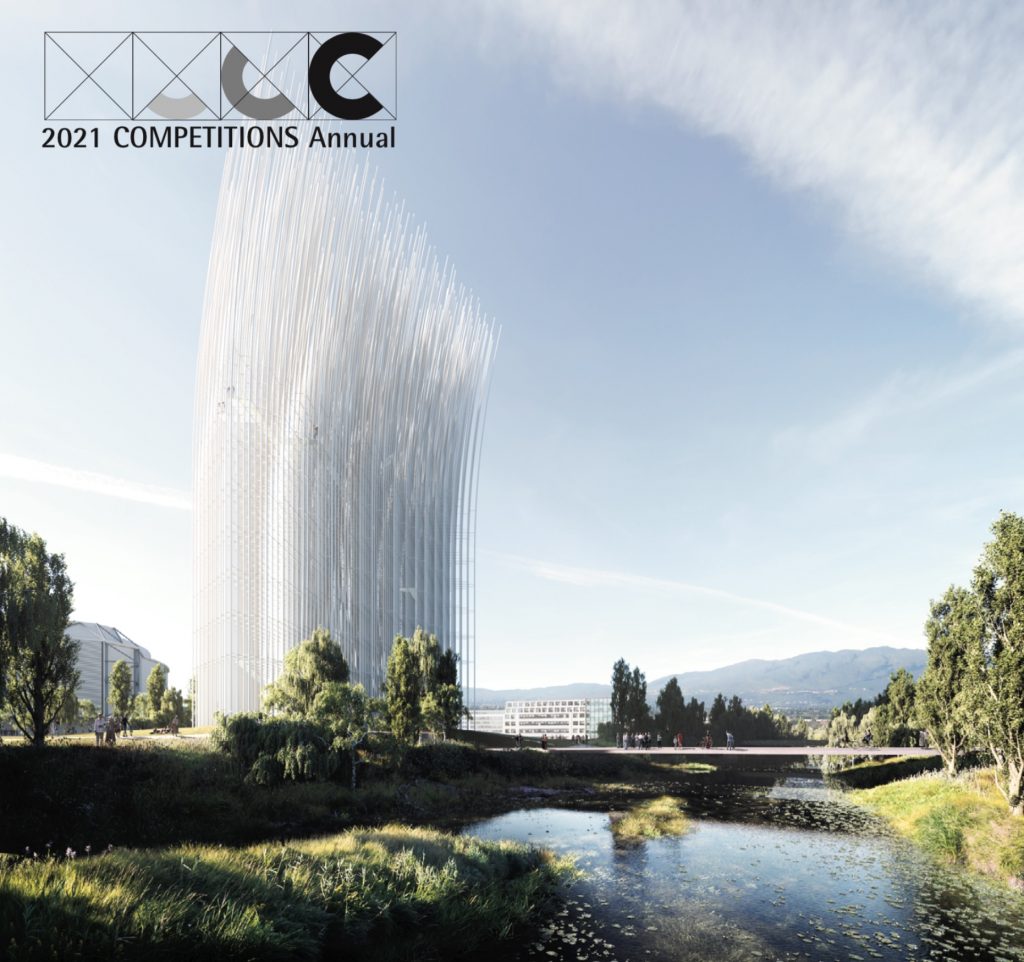
This week we received the news that the winning design for San Jose’s Urban Confluence competition by SMAR Architecture Studio has been cancelled. This comes after the original competition site was abandoned in favor of one more centrally located in downtown San Jose, Plaza de César Chávez. We can only assume that even this wasn’t enough to generate enough interest from major donors. From the very beginning of the competition, it appeared that the enthusiasm of those sponsoring the competition might be lacking links to potential donors with deep pockets—the hi-tech firms in Silicon Valley. After the competition resulted in a design that certainly entailed a major budget, the project had to be in trouble. The competition did produce a remarkable design; but this turned out to be another case where a competition, intended to generate enough public interest to fund a major project, came up short. -Ed
“A Museum for All”
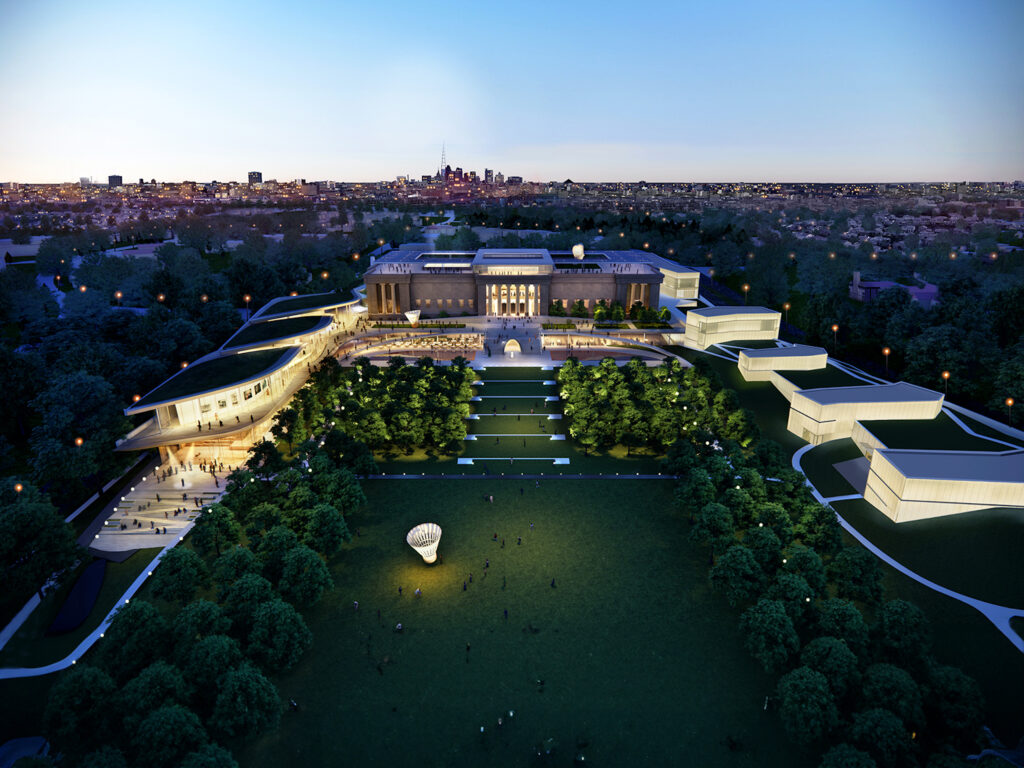
Winning entry by Weiss/Manfredi Landscape Architecture and Urbanism
Background
The Nelson-Atkins Museum of Art’s slogan “Creating a Museum for All” certainly reflects the efforts of many art museums to counter the notion that art museums exist primarily to cater to an elitist few. But one should note that this competition for an expansion of the museum’s capacity to serve a wider audience saw an initial step in this direction with the 1999 competition resulting in the Steven Holl addition, a series of pavilions stretching down one side of the large lawn area..
Read more…
Preparation and Organization of Design Competitions
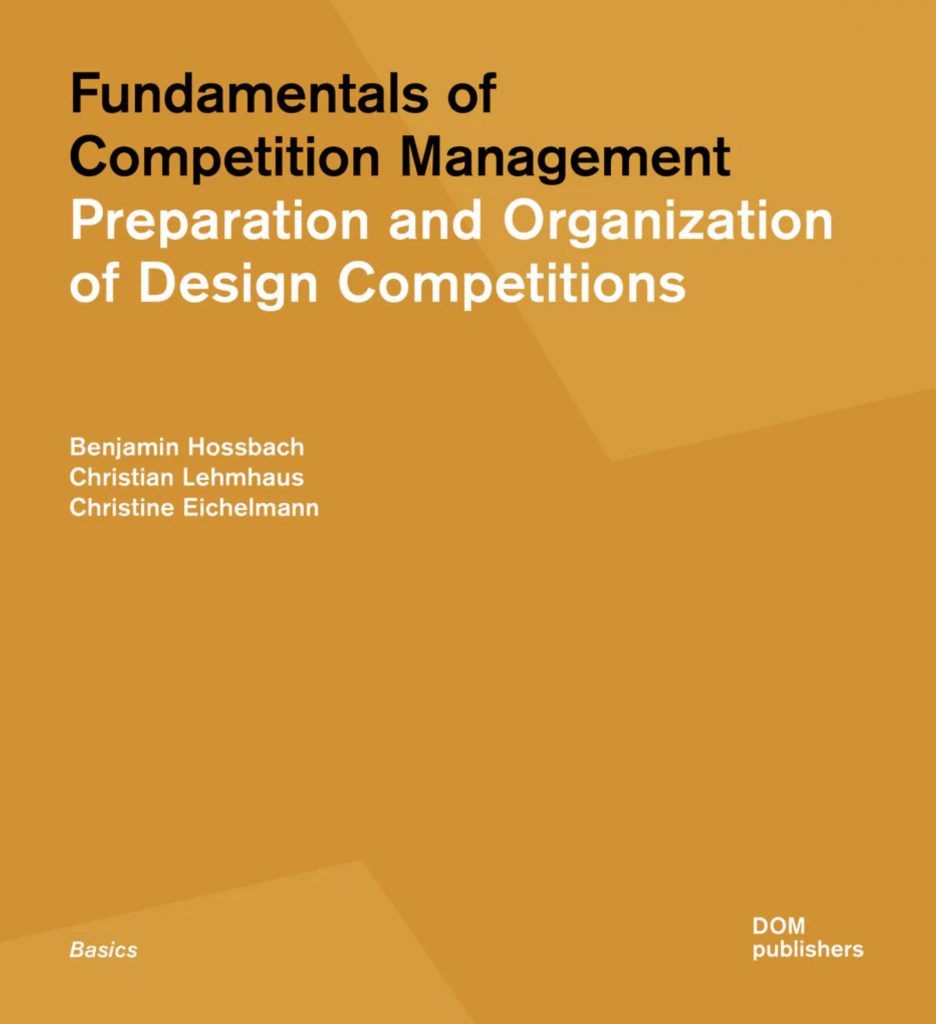
[phase 1] Benjamin Hossbach / Christian Lehmhaus / Christine Eichelmann
210 × 230 mm, 192 pp.
over 600 images
softcover
ISBN 978-3-86922-316-2 (English)
ISBN 978-3-86922-240-0 (German)
Dom Publishers
€48 in EU (For price abroad, see below)
Founded in 1998 in Berlin, Phase 1 has been a principal player in the organization and facilitation of design competitions, not only in Germany, but abroad as well. The accomplishments of the firm have been well documented in three volumes—The Architecture of Competitions—beginning in 2i006. Whereas these books mainly focused on the results of the competitions they have administered, the present work, Fundamentals of Competition Management, takes one from the very beginnings of the competition process to its conclusion. The authors envisioned the publication as “three three books in one: one „blue book“ with example projects, one „yellow book“ with statements and the „white book“ with the actual guideline to competition management.”
Although there have been a number of handbooks covering the administration of designcompetitions a study covering the entire process in such detail is a welcome addition to the the literature in this field. As a contribution to this important democratic process that has yielded exceptional design for decades, this volume is not only valid for Europe, but a current overview of the process for those globally who wish to raise the level of design by virtue of a design competition. -Ed
Foreign institutions wishing to obtain a copy of the book will recieve a discount to cover the cost of foreign shipping.
To obtain a copy for that offer, go to: accounting@phase1.de
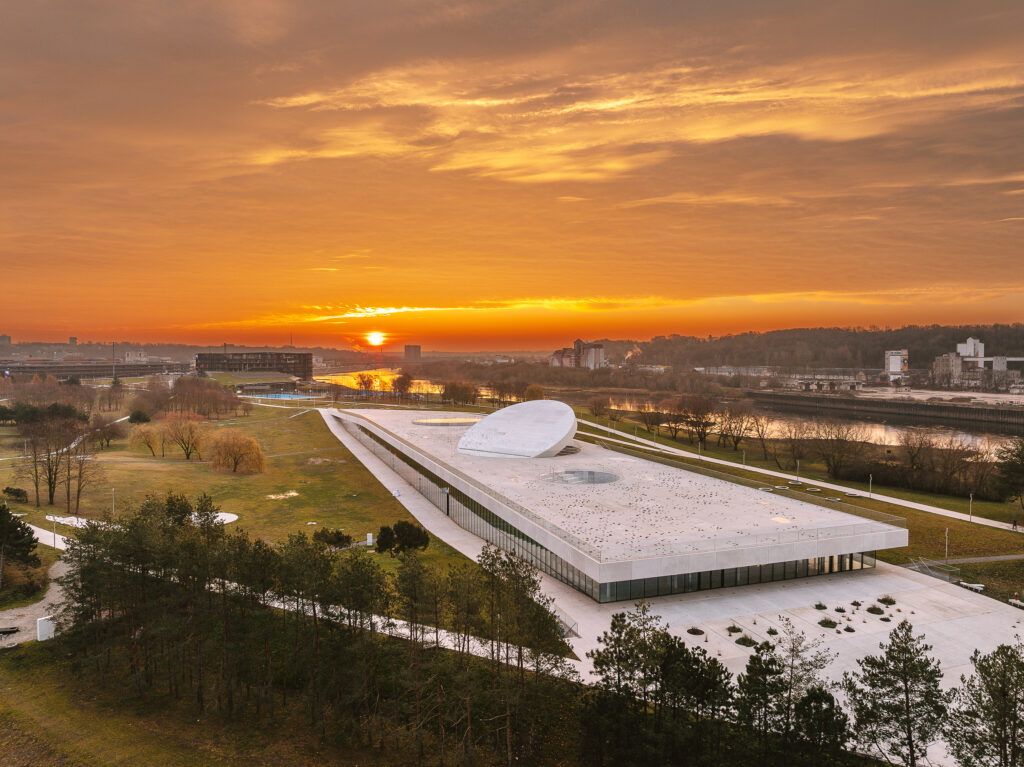
Since the recent realization of SMAR Architecture’s winning design we have now received images from a professional photo shoot. As an open competition for one of the more important projects in Europe at the time, we feel that full documentation of the process from start to finish was an important page in the history of architecture in the early 21st century. Documentation by us during the 2017 competition, with images from all finalists from the 144 entries is available at:
/competitions-static/2020/11/science-island-design-competition-finalists/
See more images…

Completed IMEX by Tuck Hinton Architects. Photo courtesy Anecdote
It is not often that we look back to a competition that occurred three decades ago that was also covered in detail by COMPETITIONS (Vol. 4, #4; pp. 14-27). What made the Chattanooga IMAX different back in 1994 was that the article covering that competition was authored by Prof. Marleen Davis, then Dean of the University of Tennessee’s School of Architecture and a member of the jury panel. This was not just a short article, covering the high points of the competition with a few talking points about the winning design. This 4,000+ word document also described in detail the jury’s observations about all the finalists, including the honorable mentions—one of the few times we have gained such a detailed glimpse in this country from the inside of the competition process.
Read more…
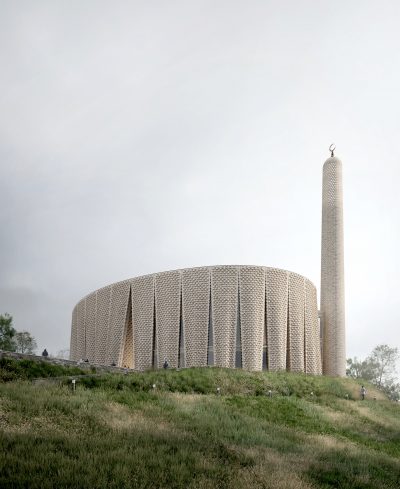
Winning entry by Luca Poian Forms Image ©Filippo Bolognese images
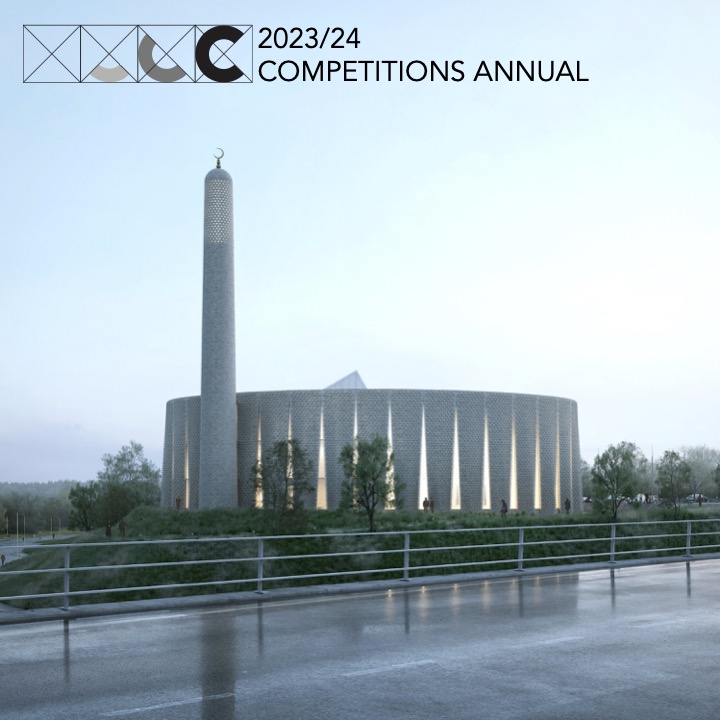
Good design seldom happens in a vacuum. And so it was with an international competition for a new mosque in Preston, U.K. A mid-sized city of 95,000, and located in Lancashire near the west coast and almost equally distant from London and Glasgow, Preston has a storied past, going all the way back to the Romans and the late Middle Ages, where it was the site of significant battles. During the Industrial Revolution, the city prospered, and it was not until after World War II that Preston experienced the British version of the U.S. Rust Belt. In the meantime, the city has experienced an upswing in economic activity, with an unemployment rate of only 3%. Aside from the appearance of new industries, the city has benefitted from the establishment of Central Lancashire University (CLU), which employs over 3,000 faculty and staff, and, as such, is one of the regions major employers. Any new university requires new facilities, and one of the most outstanding examples of this at CLU was the new Student Centre and Plaza, a result of a 2016 RIBA-sponsored competition won by Hawkins/Brown
Read More
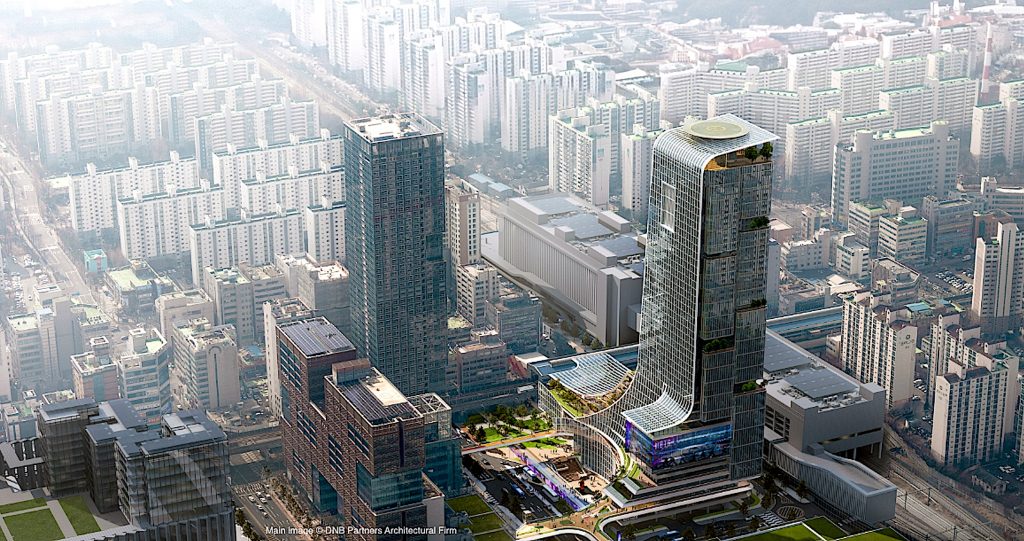
Changdong Station winner – image ©D & B Partners Architects
Whereas international competitions for real projects have become a rarity lately, Korea is a welcome exception. Among the plethora of competition announcements we receive almost weekly, several have ended with foreign firms as winners. But the history of welcoming international participants does go back several years. One notable early example was the Incheon Airport competition, won by Fentress Bradburn Architects (1962-70).
Among the more recent successes of foreign firms was the Busan Opera House competition, won by Snøhetta (2013-) and the Sejong Museum Gardens competition, won by Office OU, Toronto (2016-2023).
Read more…
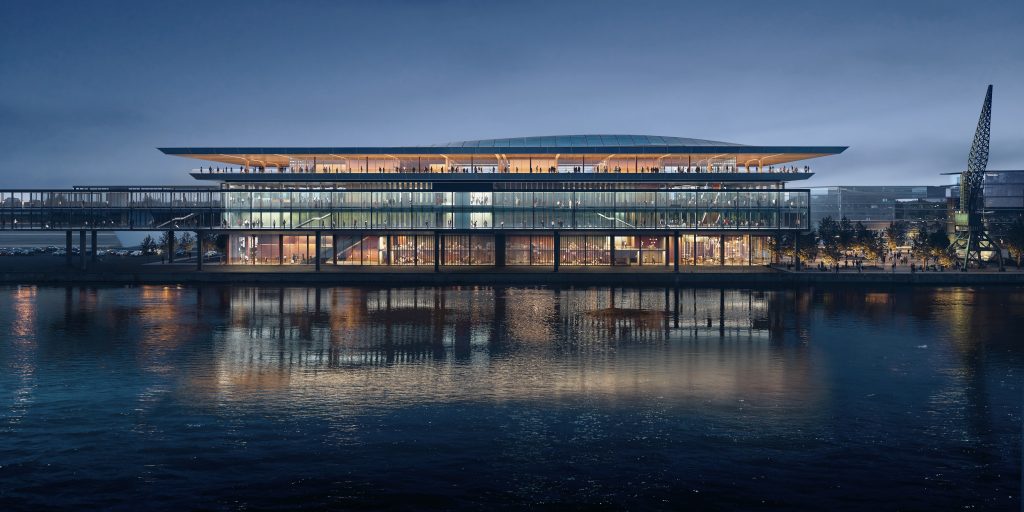
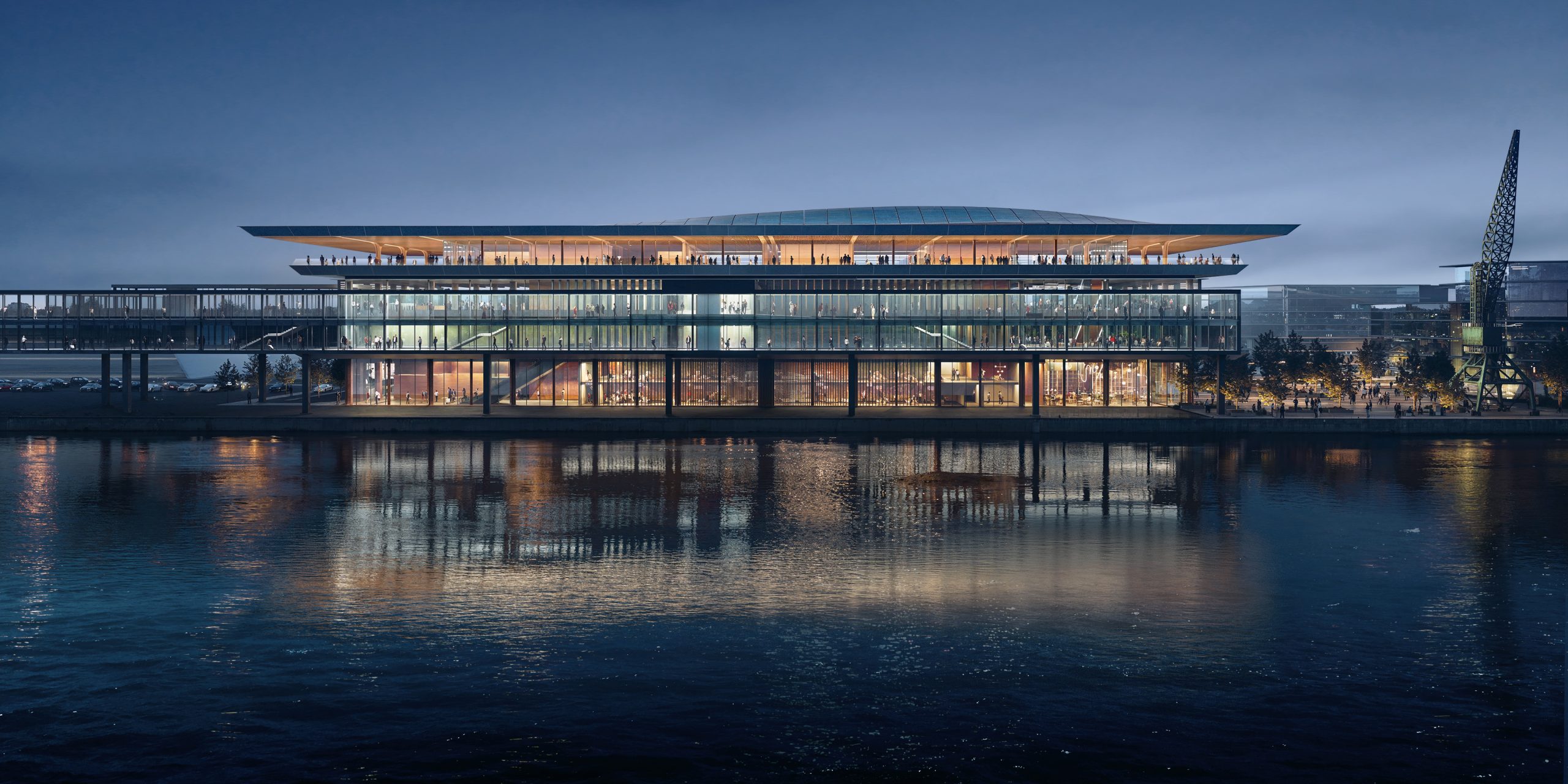
1st Place: Zaha Hadid Architects – night view from river – Render by Negativ
Arriving to board a ferry boat or cruise ship used to be a rather mundane experience. If you had luggage, you might be able to drop it off upon boarding, assuming that the boarding operation was sophisticated enough. In any case, the arrival experience was nothing to look forward to. I recall boarding the SS United States for a trip to Europe in the late 1950s. Arriving at the pier in New York, the only thought any traveler had was to board that ocean liner as soon as possible, find one’s cabin, and start exploring. If you were in New York City and arriving early, a nearby restaurant or cafe would be your best bet while passing time before boarding.
Read more…
|