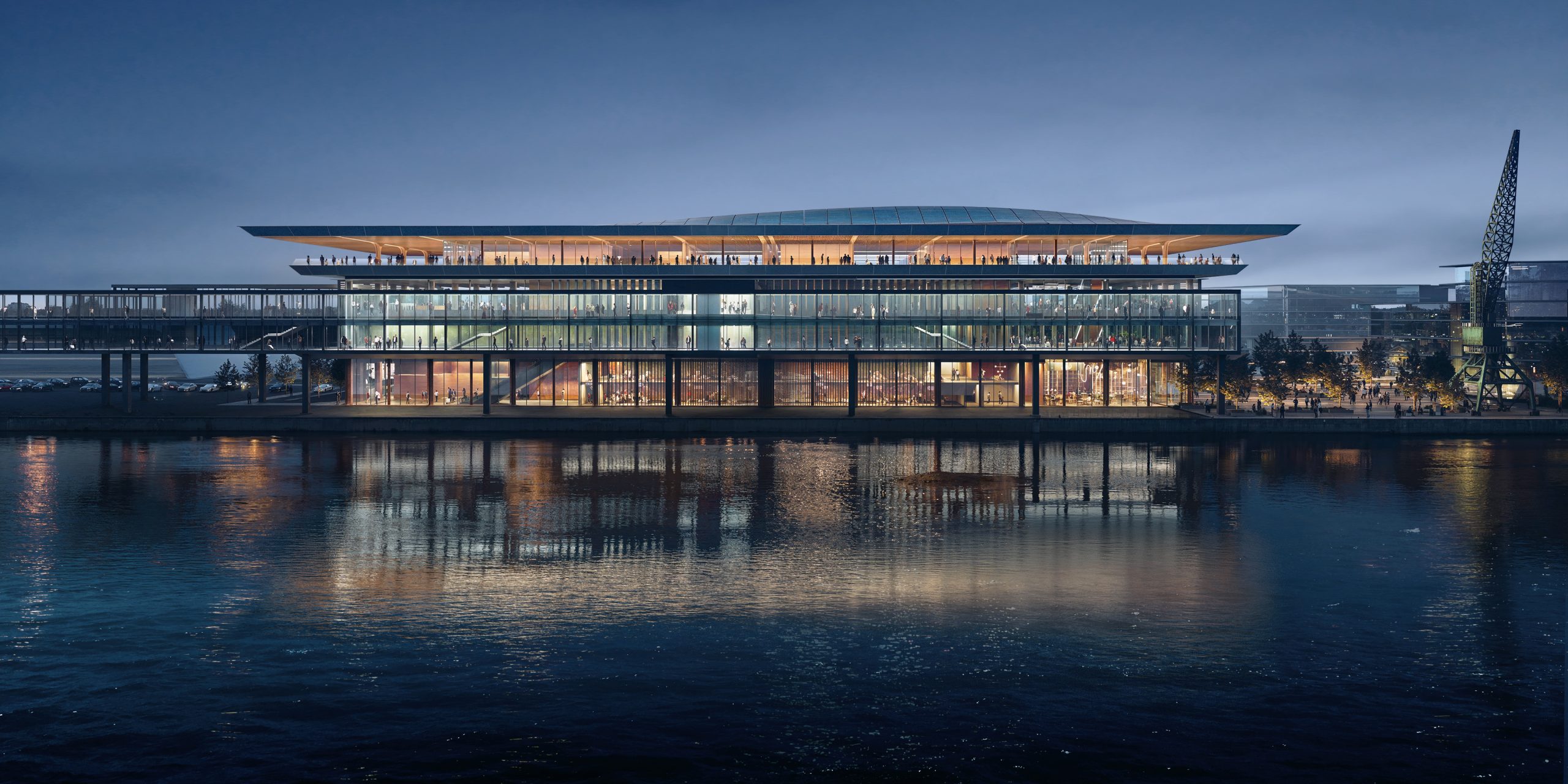


























“A Museum for All”

Winning entry by Weiss/Manfredi Landscape Architecture and Urbanism
Background
The Nelson-Atkins Museum of Art’s slogan “Creating a Museum for All” certainly reflects the efforts of many art museums to counter the notion that art museums exist primarily to cater to an elitist few. But one should note that this competition for an expansion of the museum’s capacity to serve a wider audience saw an initial step in this direction with the 1999 competition resulting in the Steven Holl addition, a series of pavilions stretching down one side of the large lawn area..


1999 Nelson-Atkins competition winning entry by Steven Holl (left)
Christian de Portzamparc’s entry as finalist (right)
The Steven Holl expansion is not only an indication that the Nelson-Atkins was willing to accommodate an out-of-the-box design, but an example that participants in this competition might do well to keep it in mind in arrving at their own approach to a solution.
Although the site designation for the present competition included the lawn in its entirety according to the competition brief, the museum’s choice of Holl’s scheme in the 1999 competition, which stretched along the edge of the lawn, instead of encroaching on it, had to be in the minds of the competitors. Thus the participants in the more recent competition took notice of the Holl strategy, where none extended their designs out to include much of the upper lawn as we see in Christian de Portzamparc’s 1999 entry (above). Instead they either focused on the approach to the exisiting main entrance (Seldorf, Kengo Kuma), the immediate space adjoining the lawn-side of the existing Beaux Arts museum (Piano; Studio Gang; WHY Architecture), and framing the lawn with an addition extending down the western edge, opposite to the Steven Holl extension (Weiss Manfredi). Here we are not suggesting that Weiss Manfredi’s strategy, extending the facilities along the edge, was the only reason the jury found favor with that particular proposal. But it did more to preserve the view of the entire facade of the original building than some of the other designs—Piano’s more open scheme possibly coming in a close second in that regard.

Front page from the competition announcement courtesy ©Malcolm Reading Consultants
Upon visiting the Nelson-Atkins museum shortly after the Steven Holl project was completed, I found it quite appropriate in its relationship to the lawn and the site in general. Now the trees planted in the interim have almost hidden his interesting effort from view as seen from the lawn—and it may also result in an unintended similar result in conjunction with the new Weiss Manfredi wing on the opposite side (abve). Here one can only say, landscape should be used to enhance the architectural experience, not serve to diminish it.
The Competition
As is the case with many invited competitions, the initial phase dealt with creating a shortlist for the actual competition phase. To guide all phases of the competition, Malcolm Reading Consultants of London, a firm with a long resume of successful competitions, was engaged. Not more than two years previously, the firm had performed the same task for the Dallas Art Museum; and the Nelson-Atkins most probably viewed those results as a positive precursor to their own program, rather than the geographical composition of the participating firms: both competitions shortlisted four U.S.-based firms and two from abroad.
The shortlisted firms for this competition were:
• Weiss/Manfredi Architecture/Landscape/Urbanism, New York
• Kengo Kuma & Associates, Tokyo
• Renzo Piano Building Workshop, Genoa/Paris
• Seldorf Architects, New York
• Studio Gang, Chicago
• WHY Architecture, Los Angeles
As mentioned beforehand, the approach of all of the contenders to the brief was described in general terms. Kengo Kuma located most of their additions to the com- plex in front or to the side of the current front entrance to the main building. Aesthetically, the message here was, ‘you are going to see something quite different.’
Seldorf Architects chose to locate their addition along the western edge of the arrival area, while framing it, and chosing a more conventional modern lookas solution. Renzo Piano chose to treat the Nelson-Atkins much as he had done with Chicago’s Art Institute—still leaving emphasis on the exiting building framing the main entrance and the opposite side with rectangular platforms, while placing most of the museum facilities to the side.
Studio Gang presented a concave facade toward the lawn, covering three stories of the existing building. It can be understood as the entry most directly integrated into the existing building as viewed from the lawn.
WHY Architecture’s strategy was similar to Studio Gang’s in covering the lower half of the lawn-side existing structure with new construction. Still, placing the majority of the new structure in concave fashion at the east side, creating an opening in the middle for an unobstructed view to the colonnades, certainly was a factor in paying homage to the existing building.
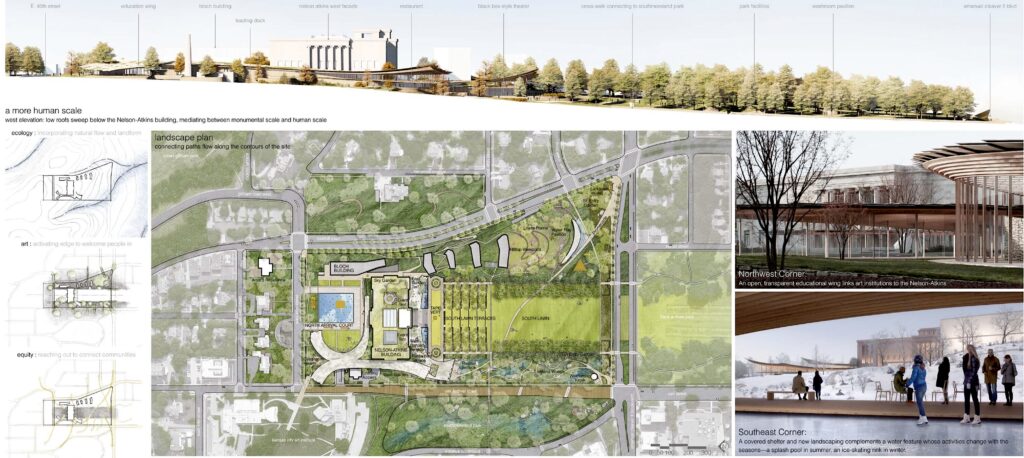
Besides the framing strategy of the winning Weiss Manfredi entry, the interesting marriage of architecture with landscape was a very strong point, and certainly understandable when one recalls the strong history of the firm when dealing with landscpe issues. All in all, quite an interesting and creative design as an addition to the Nelson-Atkins. -Ed
Winning Entry
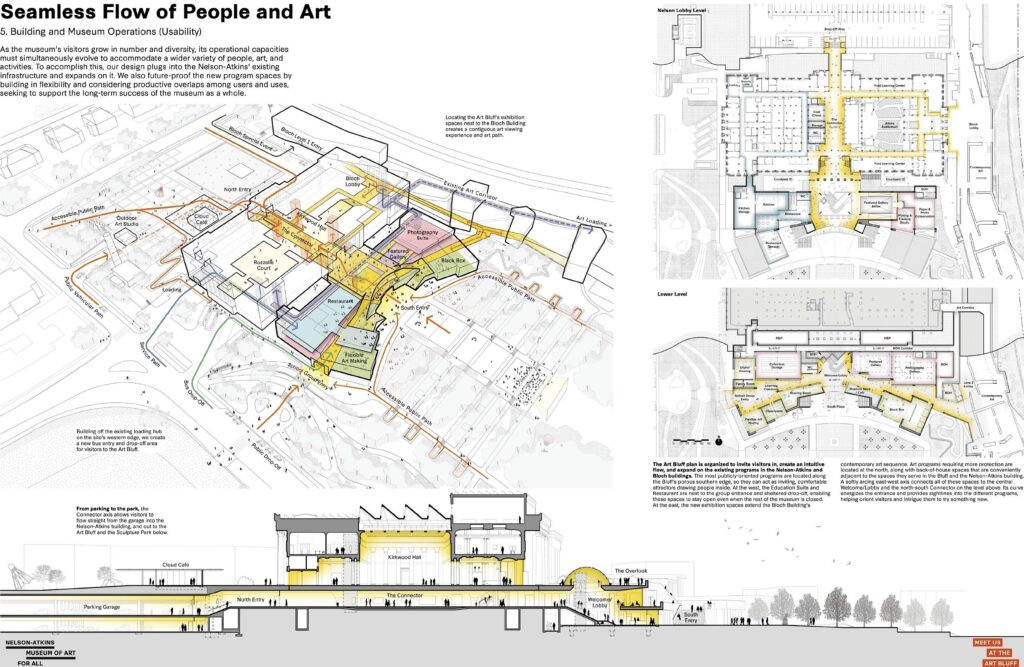
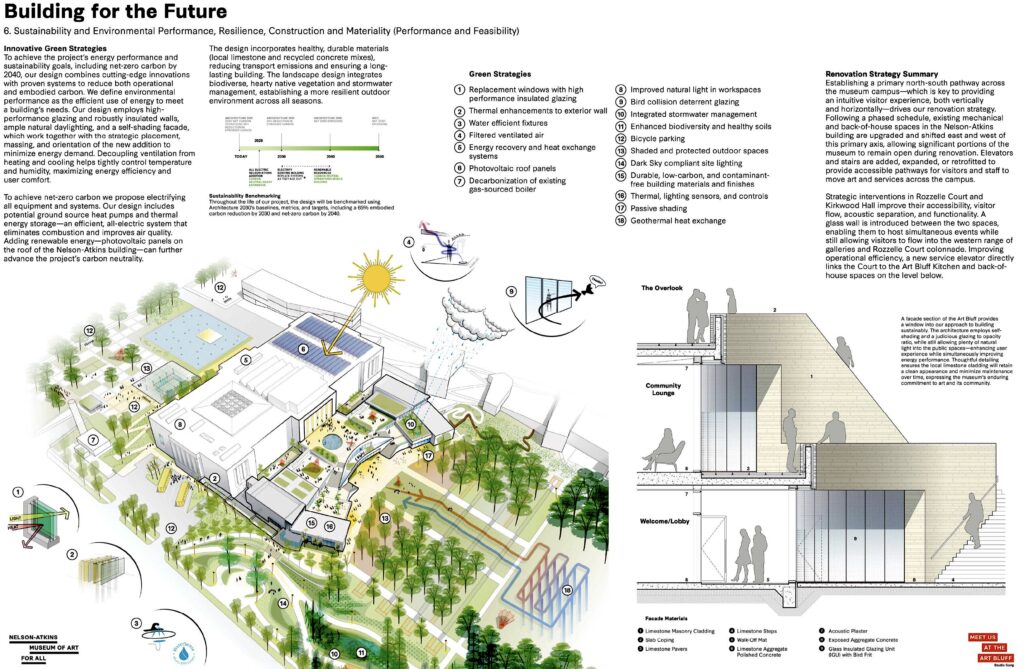
Weiss/Manfredi Architecture/ Landscape Architecture/Urbanism
Chicago, Illinois
with
SCAPE (Landscape Architecture)
Atelier Ten (Sustainability)
WeShouldDoItAll (Exhibition and Experience Design)
Taliaferro & Browne (Civil Engineering)
Jaros, Baum & Bolles (MEP Eng)
Severud Associates (Structural Eng)

View to new west wing
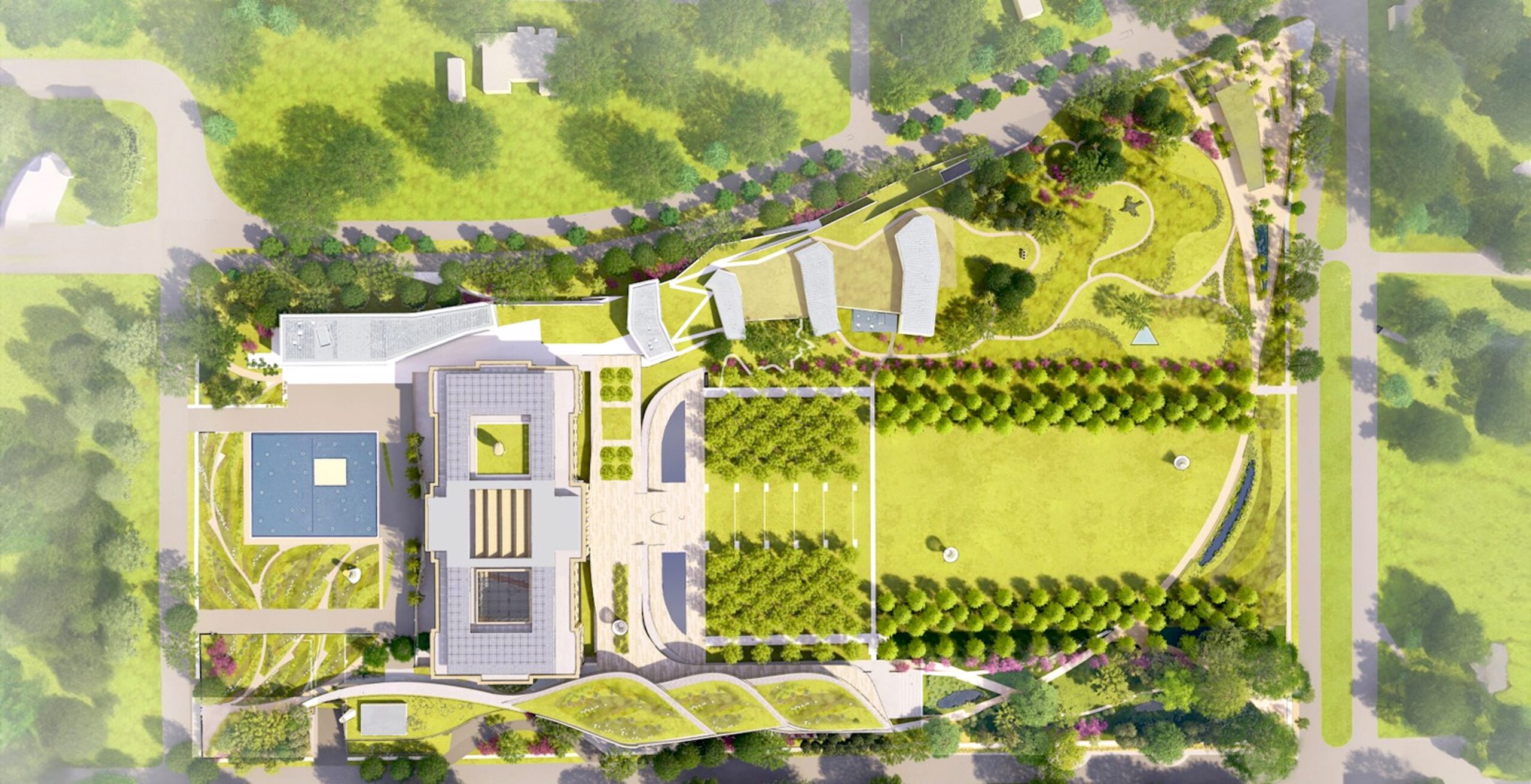
Site plan


Arrival area (left) and view to west edge (right)

Entrance to west wing from existing building


Unless otherwise noted, above images ©Weiss/Manfredi Landscape Architecture Urbanism
Finalist
Renzo Piano Building Workshop
Genoa, Italy
with West 8 (Landscape Architecture)
Arup (Sustainability, Engineering (Structural/MEP/Lighting))

Arrival perspective


Competition board section with exhibition space in detail

Unless otherwise noted, all images ©Renzo Piano Building Workshop
Finalist
Seldorf Architects
New York, NY
with Reed Hilderbrand (Landscape Architecture)
Atelier Ten (Sustainability)
Two Row Architect (Indigenous Consultant)
Renfro Design Group (Lighting),
Arup (MEP Engineering),
Guy Nordenson & Associates (Structural Engineering),
TYLin Silman (Structural Engineering)

Night arrival perspective

Arrival with expansion wing on right

Night view across pond to expansion wing

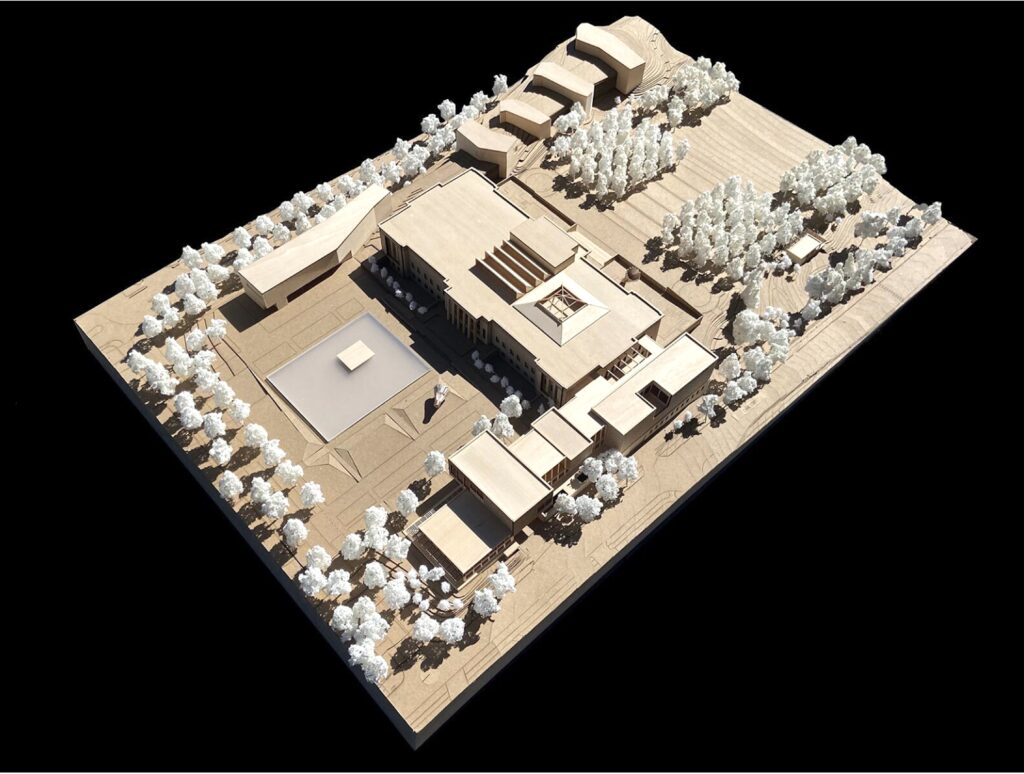
Model perspective
Unless otherwise noted, all above images ©Seldorf Architects
Finalist
Studio Gang
Chicago, Illinois
with
SCAPE (Landscape Architecture)
Atelier Ten (Sustainability)
JSA/MIXdesign (Inclusive Design)
Snyder Consultancy (Cultural Strategy)
Heritage Consulting Group (Heritage)
Burns & McDonnell (Civil Engineering)
Lam Partners (Lighting)
Altieri (MEP Engineering)
Thornton Tomasetti (Structural Engineering)

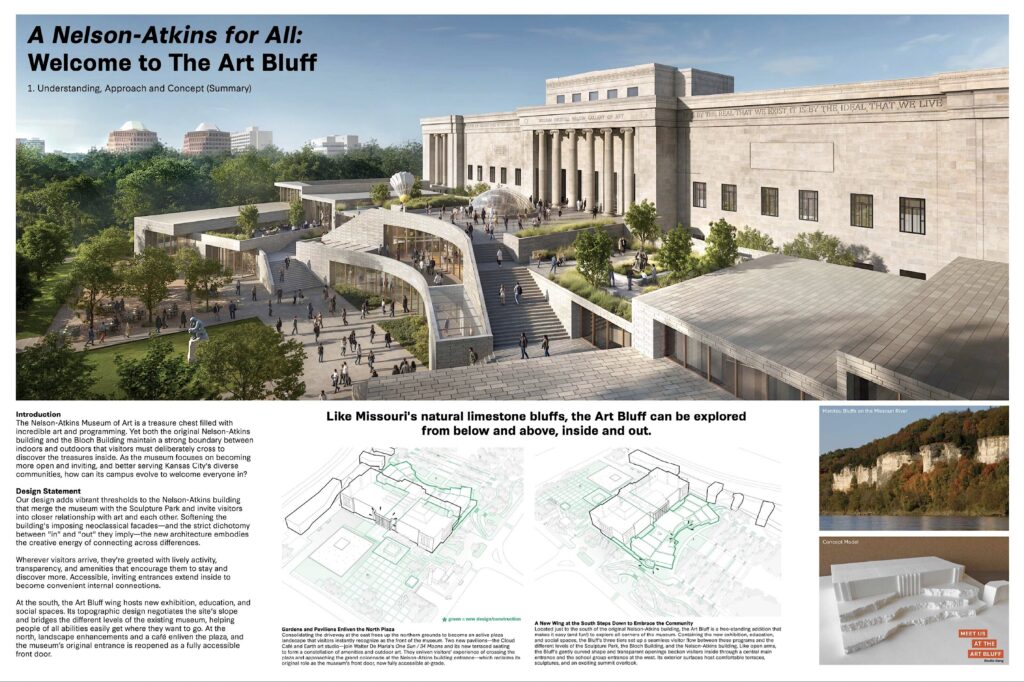
Birdseye view at night from west
 .
.
Finalist
Kengo Kuma & Associates
Tokyo, Japan
with
with GGN (Landscape Architecture)
Endelman & Associates (Accessibility)
Post Oak Preservation Solutions (Heritage)
Art Processors (Exhibition and Experience Design),
Buro Happold (Engineering (Structural/ MEP/Lighting))


 .
. 

Unless otherwise noted, all above images ©Kengo Kuma Associates
Finalist
WHY Architecture
Los Angeles, California
with WILDING x WHY (Landscape Architecture)
Atelier Ten (Sustainability)
STRATA Architecture + Preservation (Heritage)
Arup (MEP Engineering and Lighting)
TYLin Silman (Structural Engin


Unless otherwise noted, all images ©wHY Architecture