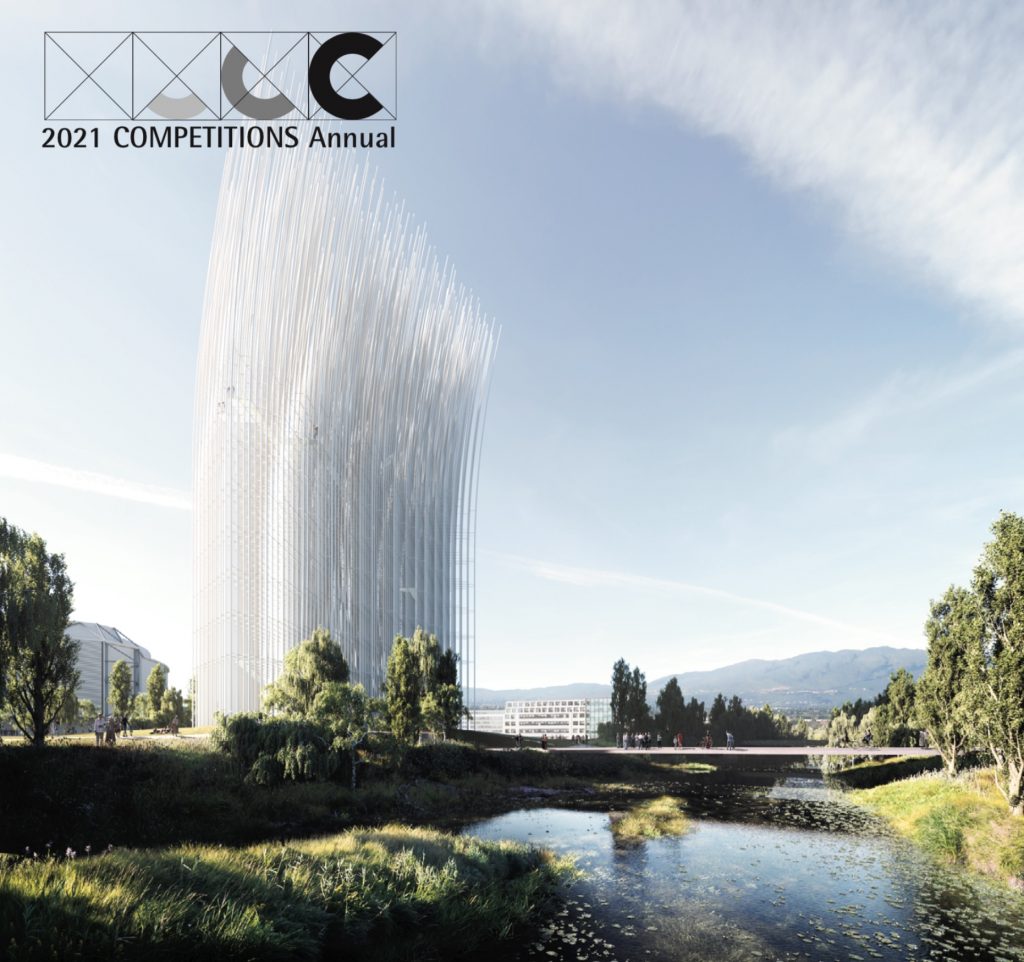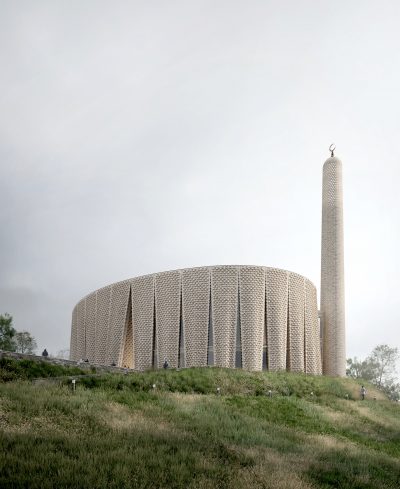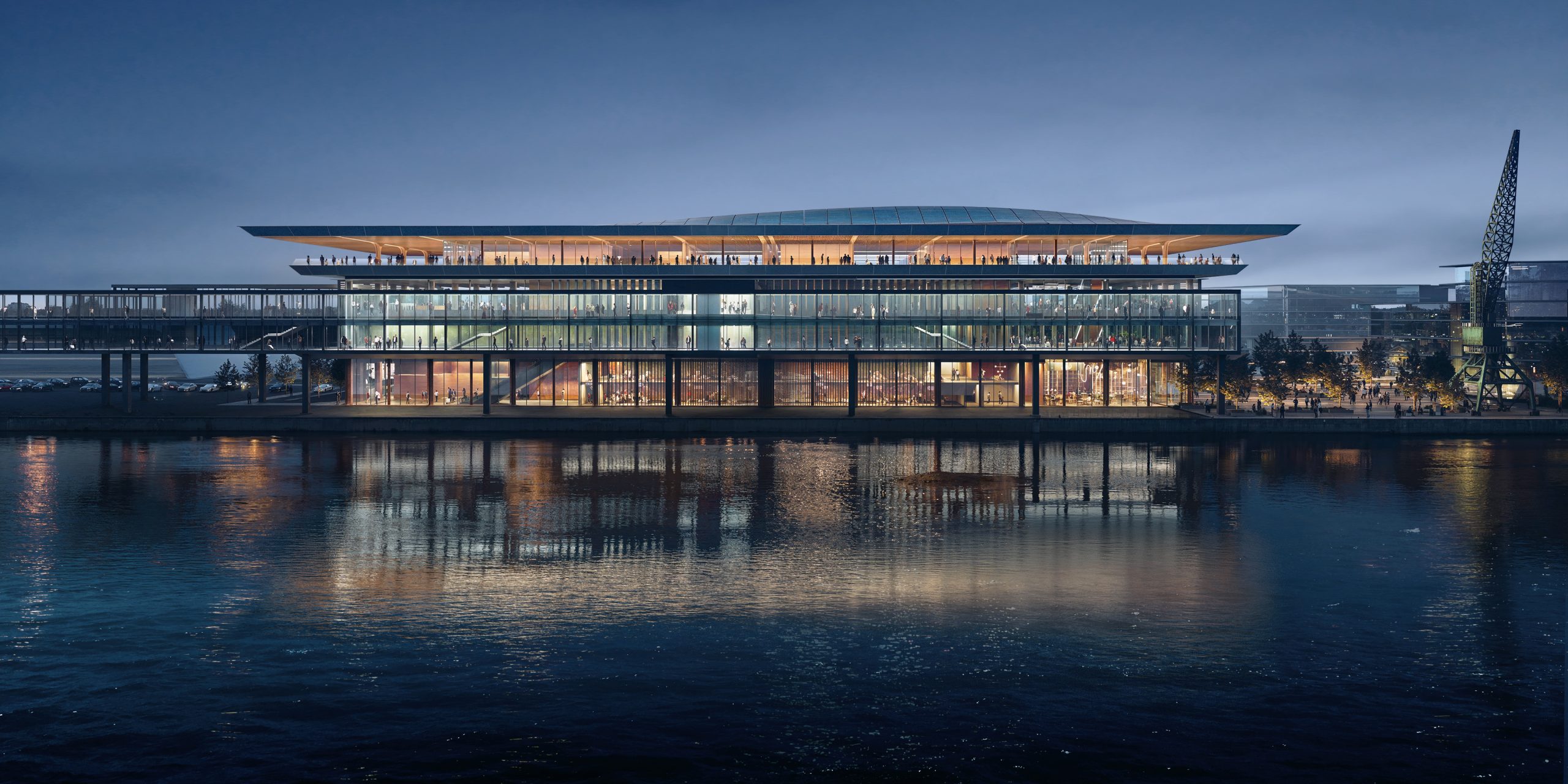



























How did COMPETITIONS get started? Whether from architects or chance encounters with laypersons, hardly a week would pass without being questioned about its origin. Actually, it was quite simple. While studying for another degree in Berlin, I became friends with two young architects, both not yet in their thirties, and at the age where European architects were frequent participants in competitions. They offered to take me along to exhibits of competition entries, even those where they had not submitted a design. Discussions always ensued, and, although I had always been interested in architecture, this was the real beginning of a crash course in the field. I learned from them that the best opportunity to climb the career ladder was to do well in a competition.
As it happened, friend Ivan Krusnic subsequently won a competition for sixteen middle schools in Berlin, and the other friend, Frederick Borck, turned out to be one of the primary experts in German hospital design. Furthermore, there was the opportunity to learn about the results of numerous competitions from excellent coverage by several of the publications covering those important projects.
 .
. 
Berlin Philharmonie in 2019. New landscaping (left); interior concernt hall (right)
During my stay in Berlin, there had to be two competitions that still are firmly etched in my memory, the Philharmonie by Hans Scharoun and Tegel Airport by Manfried von Gerkan and Volkwin Marg (see p. 200). By coincidence, I bumped into von Gerkan on the way to his induction as an AIA Fellow at a convention in Atlanta in the 1990s. This turned out to be just one of many interesting encounters over the years with architects who had been successful in entering competitions.
Upon returning to the states after a 20-year hiatus and still in academia and the arts, I kept my ear to the ground concerning possible competitions here in the U.S. Although the Vietnam Memorial competition had everyone’s attention, a decision by the National Endowment for the Arts to support design competitions in the mid-1980s was a watershed moment. I began to contact nearby university architecture programs—Ball State University and University of Cincinnati—to measure their degree of interest in a possible publication. Both were supportable, and Cincinnati’s DAAP, and Nick Chaparos in particular, were responsible for the long-time logo and design of the initial issues of COMPETITIONS.
A phone call to Paul Spreiregen, Professional Adviser to the Vietnam Memorial competition, led to a chain of events that eventually resulted in the founding of a non-profit with the dissemination of information about design competitions as its primary mission. He mentioned that an expert on competitions lived in Louisville—Grady Clay, recently retired as Editor of Landscape Architecture magazine and the Chair of the Vietnam Memorial jury. Grady turned out to be a great supporter of the idea to extablish a non-profit entity to deal with this specific mission, and once The Competition Project became a reality, contintinued to be a major factor in spreading the word with the startup of the magazine, COMPETITIONS.
After the first issues of the magazine appeared, one always wonders how it has been received. Was it all worth the effort? One answer came early on, when Professor Jon Rush at the University of Michigan related the following story: “I received my first copy of your publication as a sample—thought it was terrific—sent in my subscription and, after reading it, sent COMPETITIONS to my son, David. In that issue, he noticed a competition sponsored by Sheet Metal Workers International Association and the American Institute of Architects titled, “The Next Age of Discovery.”
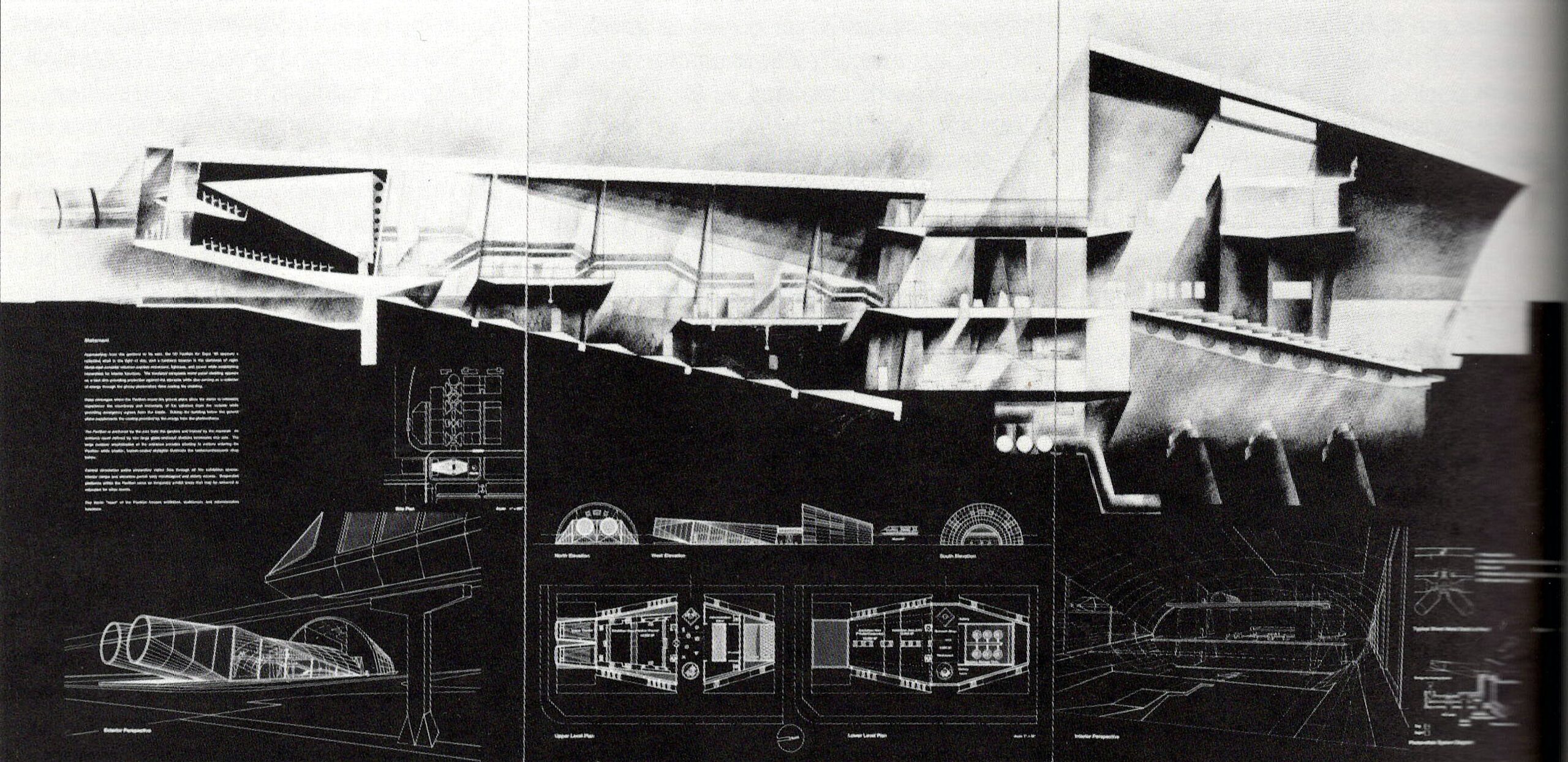
Winning entry in the 1991 “Next Age of Discovery” Competition, sponsored by the Sheet Metal Workers International Association and the American Institute of Architects.
©David Jon Rush
With a two-week deadline he entered the competition and won First Place for his design of a U.S. Pavilion using a photovoltaic skin. As a First Place winner, he received $3,000 and a trip to Expo ‘92. This led David to further expermental projects as a consultant to a leading manufacturer of photovotaics. With the Sheet Metal Workers Association International, he took part in expositions and conferences in this country as well as Canada and Mexico.” Here it should be noted that David Rush remained in New York, immedialy got a job in his field, and today is President of the successful Architecture and Interior Design firm at ETH’s New York office.
.
This account was followed by stories from many architects who won open competitions, many at a relatively young age, which turned out to be a welcome boost to the careers of many. This was well documentated in a more recent collaborative online work by Jean-Pierre Chupin (Université de Montréal) and myself—Young Architects in Competitions — When Competitions and a New Generation of Ideas Elevate Architectural Quality (Potential Architecture Books, Montreal, 2020).
Just to name a few, there were many at the very early stages of our evolution whose contributions to our success were essential: Charles Sappenfield (Ball State), Carlos Casuscelli (Ball State and Miami), Robert Probst (University of Cincinnati), Frimmel Smith (American Institute of Architects), and professional advisers and architects, Bill Liskamm, Roger Schluntz, Jeffrey Ollswang, and Bill McMinn, all of whom allowed my presence as an interested observer during their jury deliberations.
Among those who contributed to COMPETITIONS over the past decades, either as writers or leaders in the field, were Ray Gastil (Van Alan Institute), authors Will Morgan, Jayne Merkel, Michele Tilmont (Paris) and certainly Aaron Betsky. Here it would be remiss if I did not mention Thomas Hoffmann-Kuhnt of Wettbewerbe-Aktuell and Benjamin Hossbach of [phase eins], both of whom were influencial and helpful in their roles as publishers and facilatators of competitions in Germany and abroad. Hoffman-Kuhnt was founder and editor of the German publication, Wettwerbe-Aktuell, which not only featured the winners of competitions in Germany and Europe, but also the other awarded finalists. As a professional advisor of competitions, Hossbach and his firm administered many competitions, comprehensively documented in their publications, The Architecture of Competitions, as well as on their website.
I also must mention Helen Castle, former editor of AD (Architectural Design) in London, who shepherded my 2004 book— Competing Globally in Architecture Competitions—through a period of gestation to publication.
Although we now have experienced almost a complete lack of open competitions for real projects, both in this country and abroad as well—in favor of invited competitions—there is always that ray of hope that talents of young architects will again be recognized as essential contributors to the future of our environment and our quality of culture. -Ed
Important! – After the closing of our website on June 1, 2025, you will be able to access competitions.org for years to come for research purposes at Harvard GSD’s Loeb Library: