The Finnish Museum of Architecture and Design Finalists
Finnish Museum of Architecture and Design competition site
Dating back to the 18th century, the history of architectural competitions in Finland has become an established process on the way to achieving exceptional design in its public realm.
Read more…
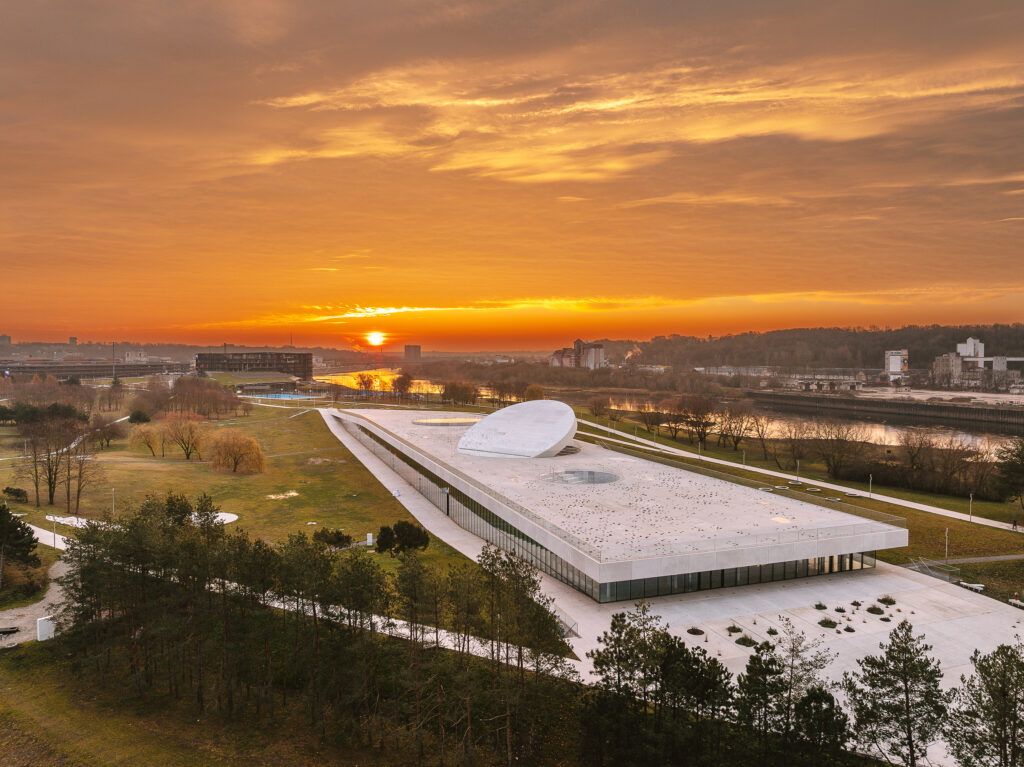
Since the recent realization of SMAR Architecture’s winning design we have now received images from a professional photo shoot. As an open competition for one of the more important projects in Europe at the time, we feel that full documentation of the process from start to finish was an important page in the history of
Read more…
“A Museum for All”
Winning entry by Weiss/Manfredi Landscape Architecture and Urbanism
Background The Nelson-Atkins Museum of Art’s slogan “Creating a Museum for All” certainly reflects the efforts of many art museums to counter the notion that art museums exist primarily to cater to an elitist few. But one should
Read more…
Completed IMEX by Tuck Hinton Architects. Photo courtesy Anecdote
It is not often that we look back to a competition that occurred three decades ago that was also covered in detail by COMPETITIONS (Vol. 4, #4; pp. 14-27). What made the Chattanooga IMAX different back in 1994 was that
Read more…
Winning entry ©Herzog de Meuron
In visiting any museum, one might wonder what important works of art are out of view in storage, possibly not considered high profile enough to see the light of day? In Korea, an answer to this question is in the making.
It can come as
Read more…
Six Firms Competed to Rethink the Future of a Major Museum
Note: Our article of three weeks ago, announcing the designs of the six firms competing in this competition, apparently only reached about half of our subscribers due to a glitch in our provider’s software. Therefore, we felt the need to include most of that article here to serve as background for the naming of the winner, Nieto Sobejano Arquitectos of Madrid/Berlin.
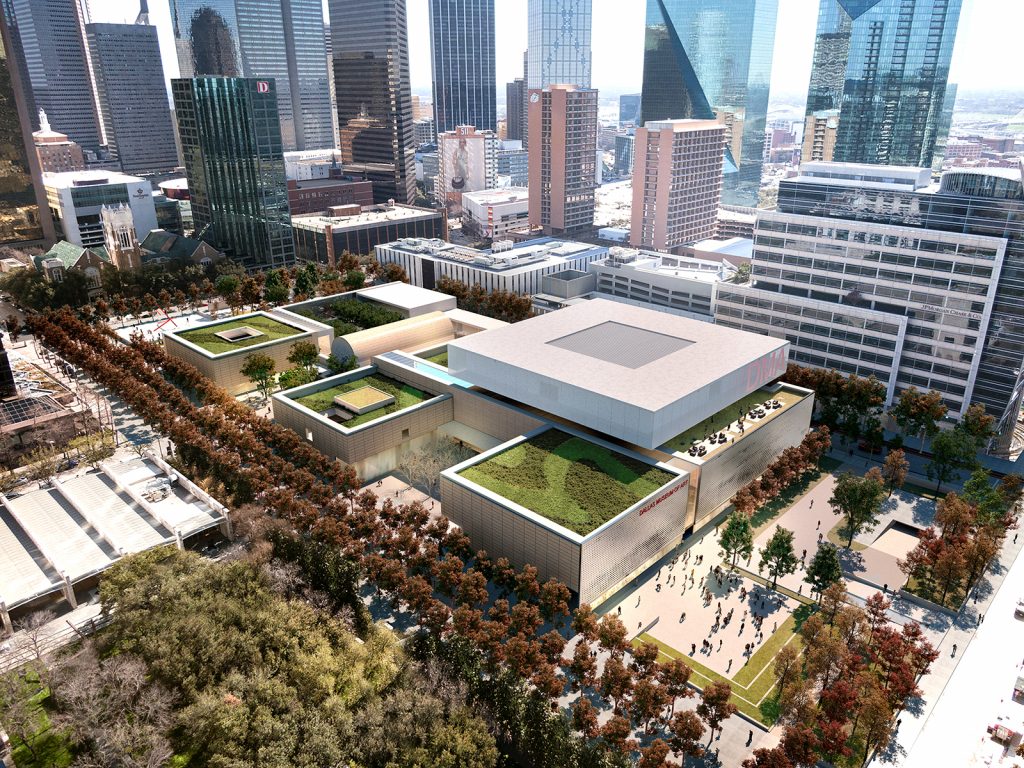
Aerial view of winning design ©Nieto Sobejano Arquitectos (courtesy Malcolm Reading Consultants)
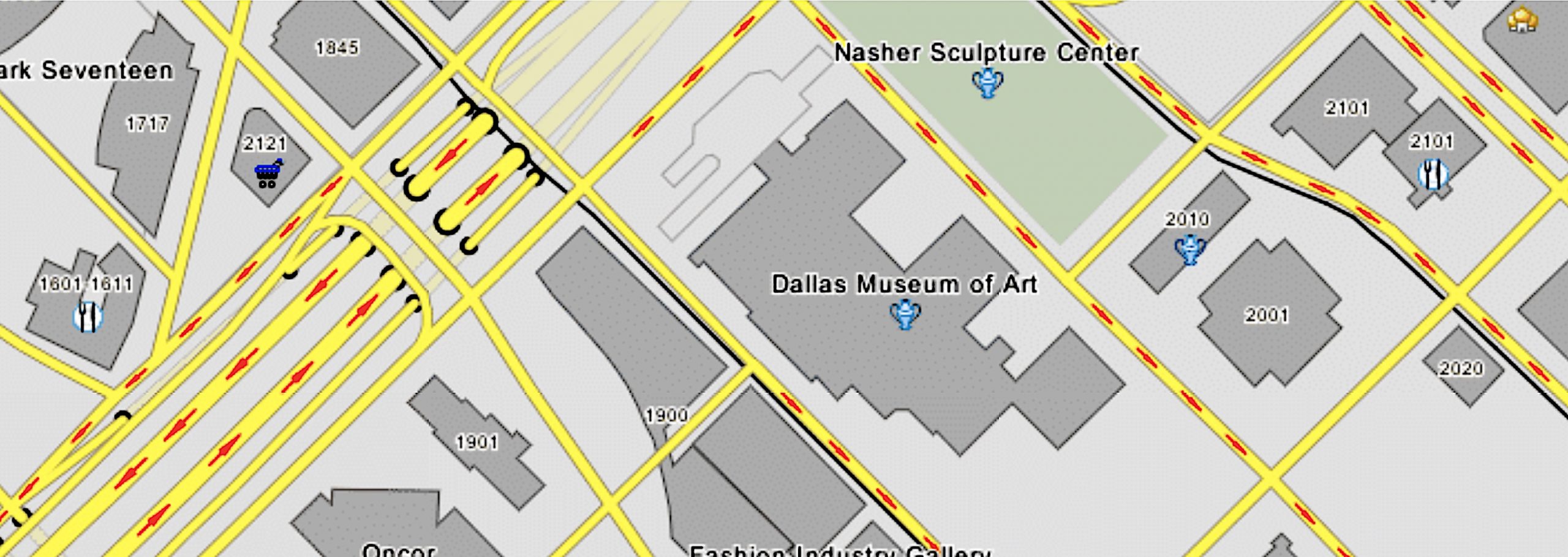
The history of the Dallas Museum of Art’s expansion has been punctuated by several moves, culminating in a new building designed by Edward Larrabee Barnes in 1984. The importance of this move to a new, somewhat desolate location in the city cannot be underestimated: it has led to the revitalization of what is now called the “Arts District,” with the relocation of various arts institutions to new facilities: the opera house (Foster and Partners), Dee and Charles Wyly Performing Arts Theater (REX/OMA), Nasher Sculpture Center (Renzo Piano), and I.M. Pei’s Meyerson Symphony Center being among the most significant.
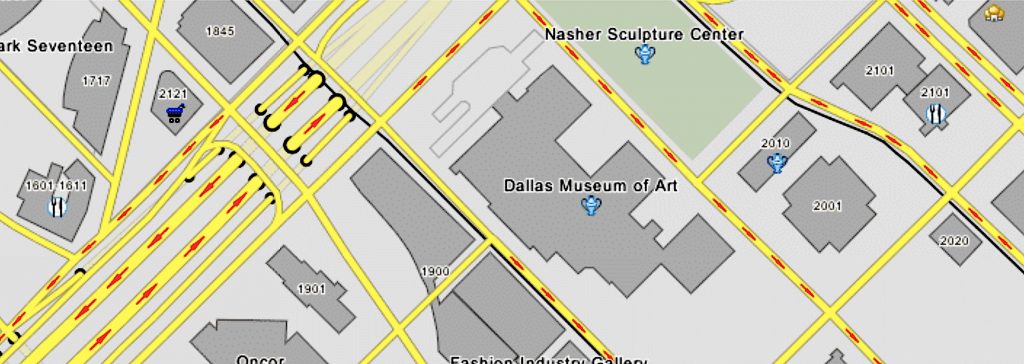
Image ©Wikimapia
As has been the case with numerous art museums, demands for more space to enable the showing of an expanding inventory. together with recognition that art is not just for the elites, has led those institutions to rethink how a museum should function in modern day society. With new high-rise buildings surrounding the present DMA, the present building, with an Indiana limestone facade, had to some “become unwelcoming, off-putting, and defensive.” To address this issue, both for expansion and refurbishment of the existing DMA, the Trustees looked to a competition to bring the best ideas for the new project. This decision should be seen against the background of a local/regional context: Dallas’s nearby, smaller neighbor, Fort Worth, had been at the forefront of museum design on the national and international scene when it came to museum design. Louis Kahn’s Kimball Museum (1972) was a pilgrimage destination for young architects, and Tadeo Ando’s Museum of Modern Art there had been the result of a competition (1997).
Read more…
Six Firms Compete to Rethink the Future of a Major Museum
(The scheduled announcement of the competition winner is to occur in August. Until that time we will refrain from commenting on the merits of the individual entries. In viewing the presentation boards of the six shortlisted firms below, readers should not draw
Read more…
View from Congress Square of Lever Architecture entry showing new wing on left
A New Wing to Accommodate a Museum’s Burgeoning Holdings,
New Programs, and Rise in Attendance
The passage of time has seen most art museums adding on new wings, or even deciding on a brand new
Read more…
Courtesy Malcolm Reading Consultants, ©Kengo Kuma & Associates
A UNESCO World Heritage Site Again on the World Stage
How does one approach a challenge when creating a design worthy of a park with a history dating back to antiquity? This was what four design teams faced when shortlisted for the design
Read more…
Chungji National Heritage Museum Competition
For those unfamiliar with Korean Heritage and its symbols, the choice of the jury for a new complex to house artifacts, now located at various scattered sites, would seem to beg more information, especially when one views the designs of the non-selected finalists—all quite modern.
Read more…
|
San Jose’s Urban Confluence Winner Cancelled
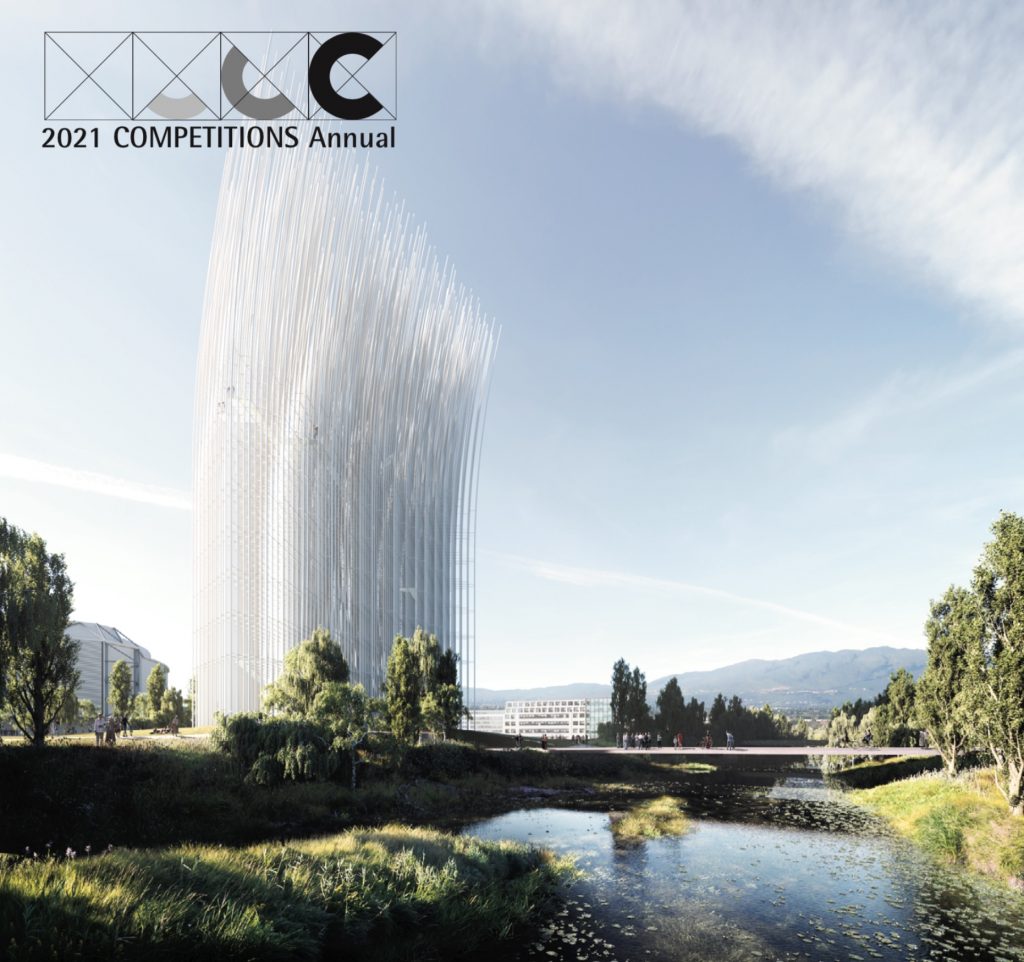
This week we received the news that the winning design for San Jose’s Urban Confluence competition by SMAR Architecture Studio has been cancelled. This comes after the original competition site was abandoned in favor of one more centrally located in downtown San Jose, Plaza de César Chávez. We can only assume that even this wasn’t enough to generate enough interest from major donors. From the very beginning of the competition, it appeared that the enthusiasm of those sponsoring the competition might be lacking links to potential donors with deep pockets—the hi-tech firms in Silicon Valley. After the competition resulted in a design that certainly entailed a major budget, the project had to be in trouble. The competition did produce a remarkable design; but this turned out to be another case where a competition, intended to generate enough public interest to fund a major project, came up short. -Ed
“A Museum for All”
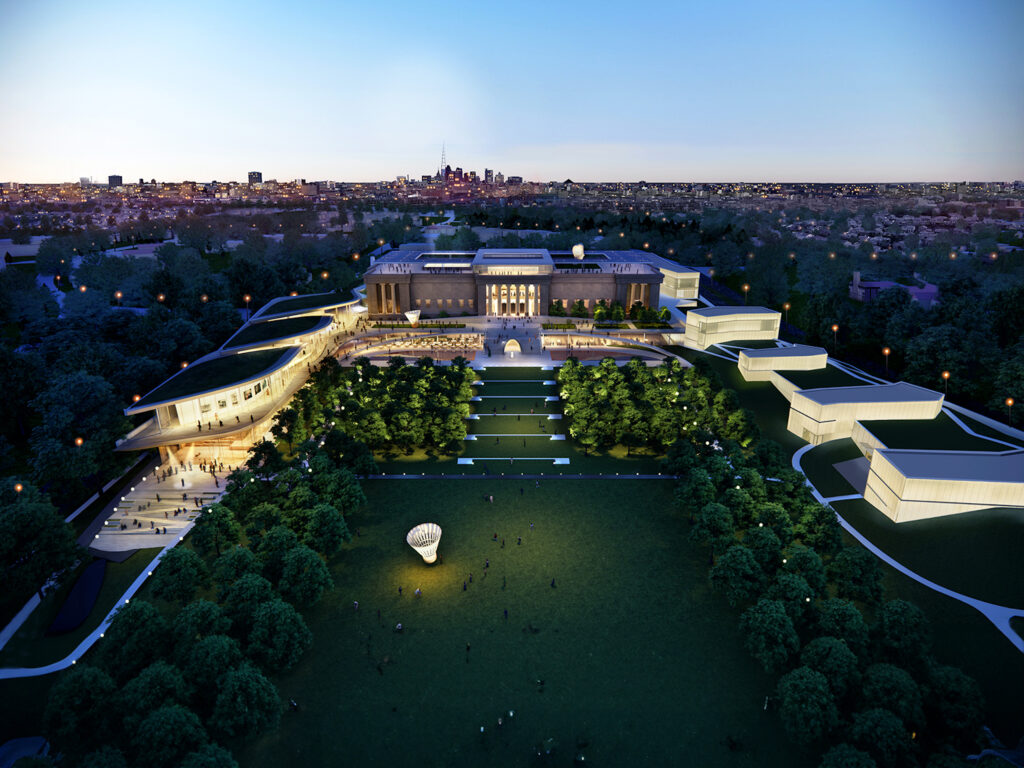
Winning entry by Weiss/Manfredi Landscape Architecture and Urbanism
Background
The Nelson-Atkins Museum of Art’s slogan “Creating a Museum for All” certainly reflects the efforts of many art museums to counter the notion that art museums exist primarily to cater to an elitist few. But one should note that this competition for an expansion of the museum’s capacity to serve a wider audience saw an initial step in this direction with the 1999 competition resulting in the Steven Holl addition, a series of pavilions stretching down one side of the large lawn area..
Read more…
Preparation and Organization of Design Competitions
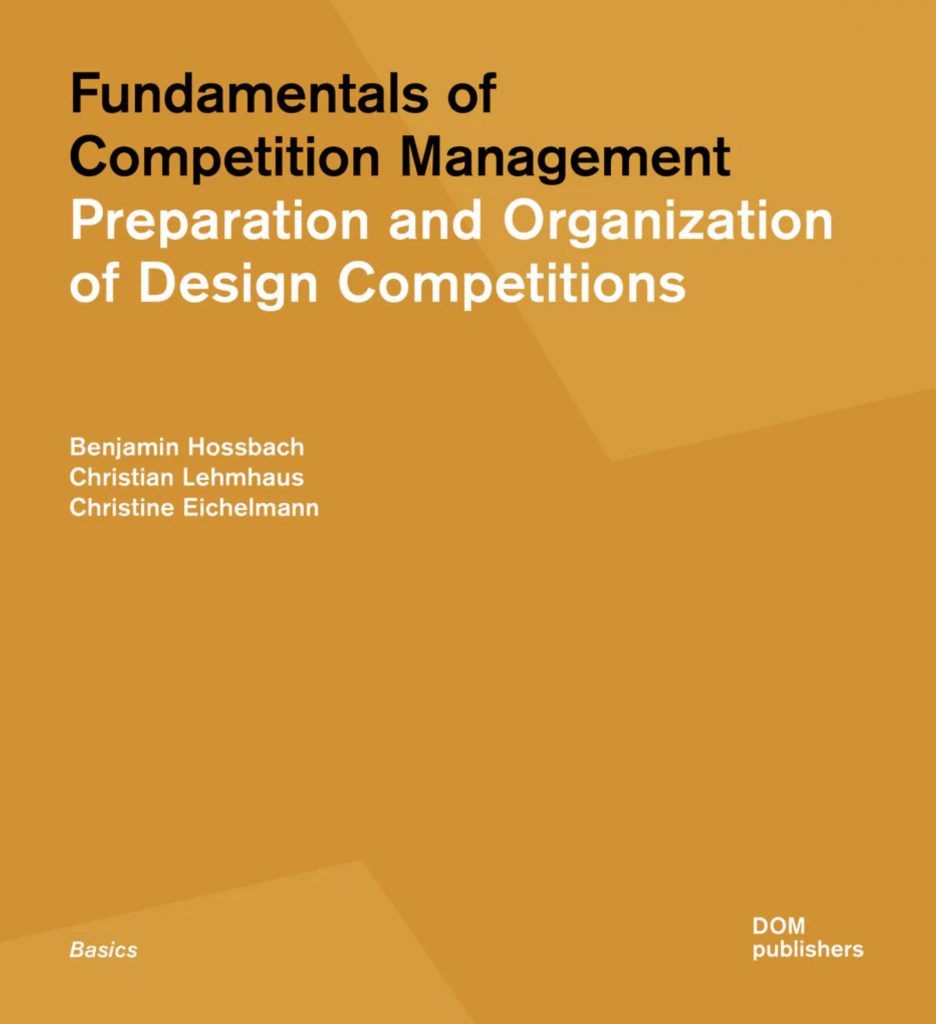
[phase 1] Benjamin Hossbach / Christian Lehmhaus / Christine Eichelmann
210 × 230 mm, 192 pp.
over 600 images
softcover
ISBN 978-3-86922-316-2 (English)
ISBN 978-3-86922-240-0 (German)
Dom Publishers
€48 in EU (For price abroad, see below)
Founded in 1998 in Berlin, Phase 1 has been a principal player in the organization and facilitation of design competitions, not only in Germany, but abroad as well. The accomplishments of the firm have been well documented in three volumes—The Architecture of Competitions—beginning in 2i006. Whereas these books mainly focused on the results of the competitions they have administered, the present work, Fundamentals of Competition Management, takes one from the very beginnings of the competition process to its conclusion. The authors envisioned the publication as “three three books in one: one „blue book“ with example projects, one „yellow book“ with statements and the „white book“ with the actual guideline to competition management.”
Although there have been a number of handbooks covering the administration of designcompetitions a study covering the entire process in such detail is a welcome addition to the the literature in this field. As a contribution to this important democratic process that has yielded exceptional design for decades, this volume is not only valid for Europe, but a current overview of the process for those globally who wish to raise the level of design by virtue of a design competition. -Ed
Foreign institutions wishing to obtain a copy of the book will recieve a discount to cover the cost of foreign shipping.
To obtain a copy for that offer, go to: accounting@phase1.de
Since the recent realization of SMAR Architecture’s winning design we have now received images from a professional photo shoot. As an open competition for one of the more important projects in Europe at the time, we feel that full documentation of the process from start to finish was an important page in the history of architecture in the early 21st century. Documentation by us during the 2017 competition, with images from all finalists from the 144 entries is available at:
/competitions-static/2020/11/science-island-design-competition-finalists/
See more images…

Completed IMEX by Tuck Hinton Architects. Photo courtesy Anecdote
It is not often that we look back to a competition that occurred three decades ago that was also covered in detail by COMPETITIONS (Vol. 4, #4; pp. 14-27). What made the Chattanooga IMAX different back in 1994 was that the article covering that competition was authored by Prof. Marleen Davis, then Dean of the University of Tennessee’s School of Architecture and a member of the jury panel. This was not just a short article, covering the high points of the competition with a few talking points about the winning design. This 4,000+ word document also described in detail the jury’s observations about all the finalists, including the honorable mentions—one of the few times we have gained such a detailed glimpse in this country from the inside of the competition process.
Read more…
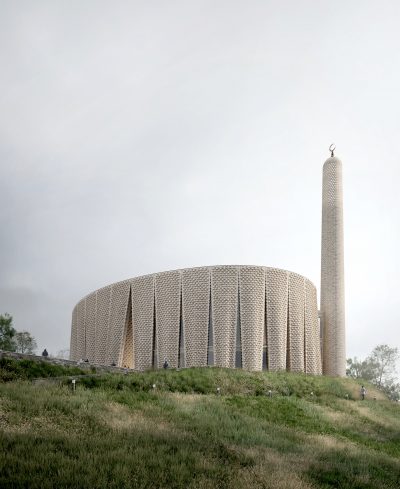
Winning entry by Luca Poian Forms Image ©Filippo Bolognese images
Good design seldom happens in a vacuum. And so it was with an international competition for a new mosque in Preston, U.K. A mid-sized city of 95,000, and located in Lancashire near the west coast and almost equally distant from London and Glasgow, Preston has a storied past, going all the way back to the Romans and the late Middle Ages, where it was the site of significant battles. During the Industrial Revolution, the city prospered, and it was not until after World War II that Preston experienced the British version of the U.S. Rust Belt. In the meantime, the city has experienced an upswing in economic activity, with an unemployment rate of only 3%. Aside from the appearance of new industries, the city has benefitted from the establishment of Central Lancashire University (CLU), which employs over 3,000 faculty and staff, and, as such, is one of the regions major employers. Any new university requires new facilities, and one of the most outstanding examples of this at CLU was the new Student Centre and Plaza, a result of a 2016 RIBA-sponsored competition won by Hawkins/Brown
Read More
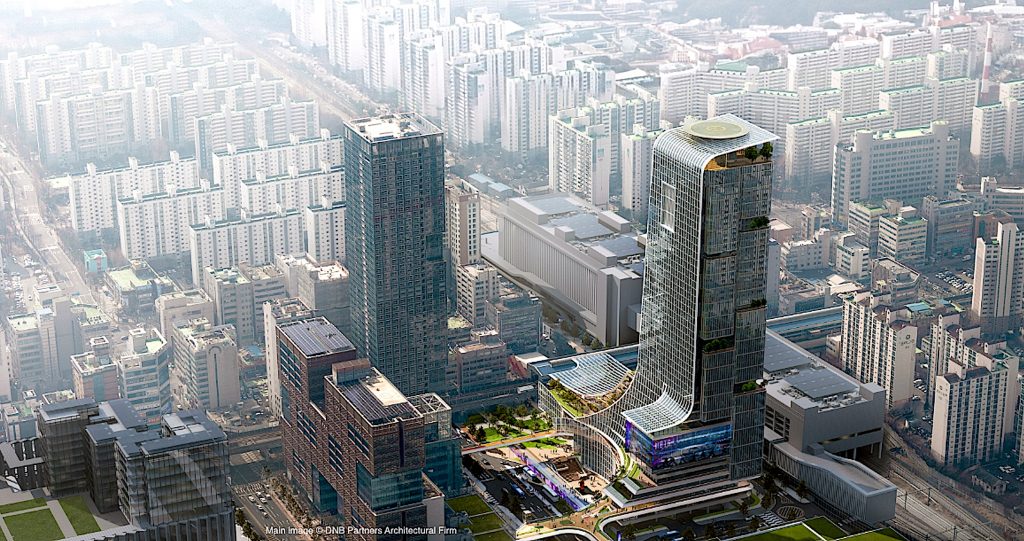
Changdong Station winner – image ©D & B Partners Architects
Whereas international competitions for real projects have become a rarity lately, Korea is a welcome exception. Among the plethora of competition announcements we receive almost weekly, several have ended with foreign firms as winners. But the history of welcoming international participants does go back several years. One notable early example was the Incheon Airport competition, won by Fentress Bradburn Architects (1962-70).
Among the more recent successes of foreign firms was the Busan Opera House competition, won by Snøhetta (2013-) and the Sejong Museum Gardens competition, won by Office OU, Toronto (2016-2023).
Read more…
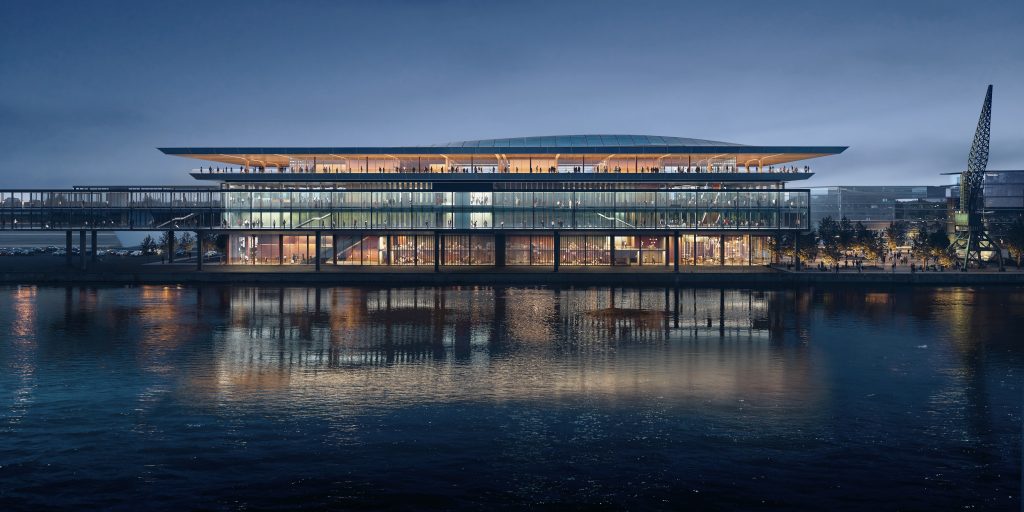
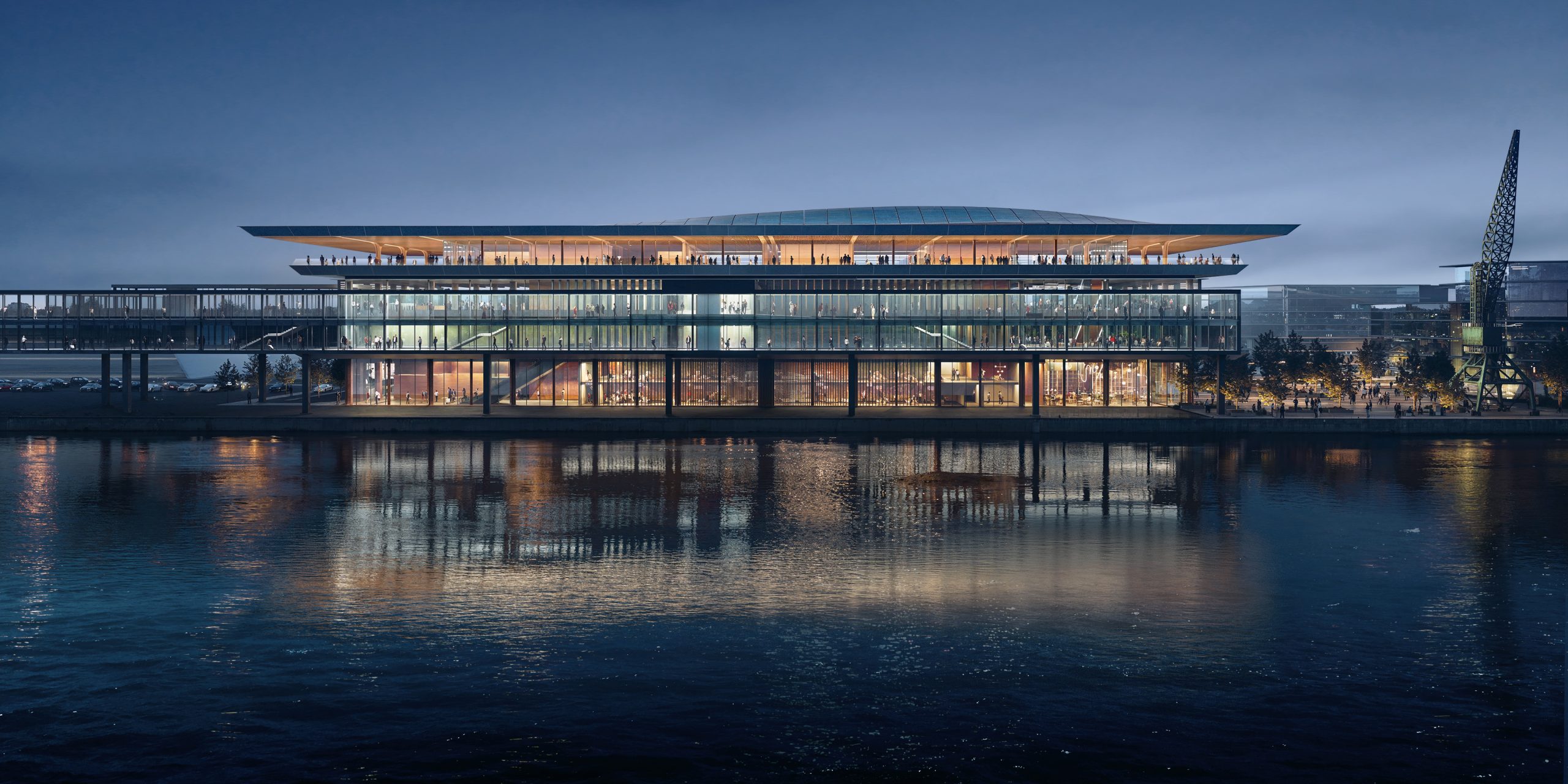
1st Place: Zaha Hadid Architects – night view from river – Render by Negativ
Arriving to board a ferry boat or cruise ship used to be a rather mundane experience. If you had luggage, you might be able to drop it off upon boarding, assuming that the boarding operation was sophisticated enough. In any case, the arrival experience was nothing to look forward to. I recall boarding the SS United States for a trip to Europe in the late 1950s. Arriving at the pier in New York, the only thought any traveler had was to board that ocean liner as soon as possible, find one’s cabin, and start exploring. If you were in New York City and arriving early, a nearby restaurant or cafe would be your best bet while passing time before boarding.
Read more…
|