The Reichstag Visitors Center in Berlin/Tiergarten
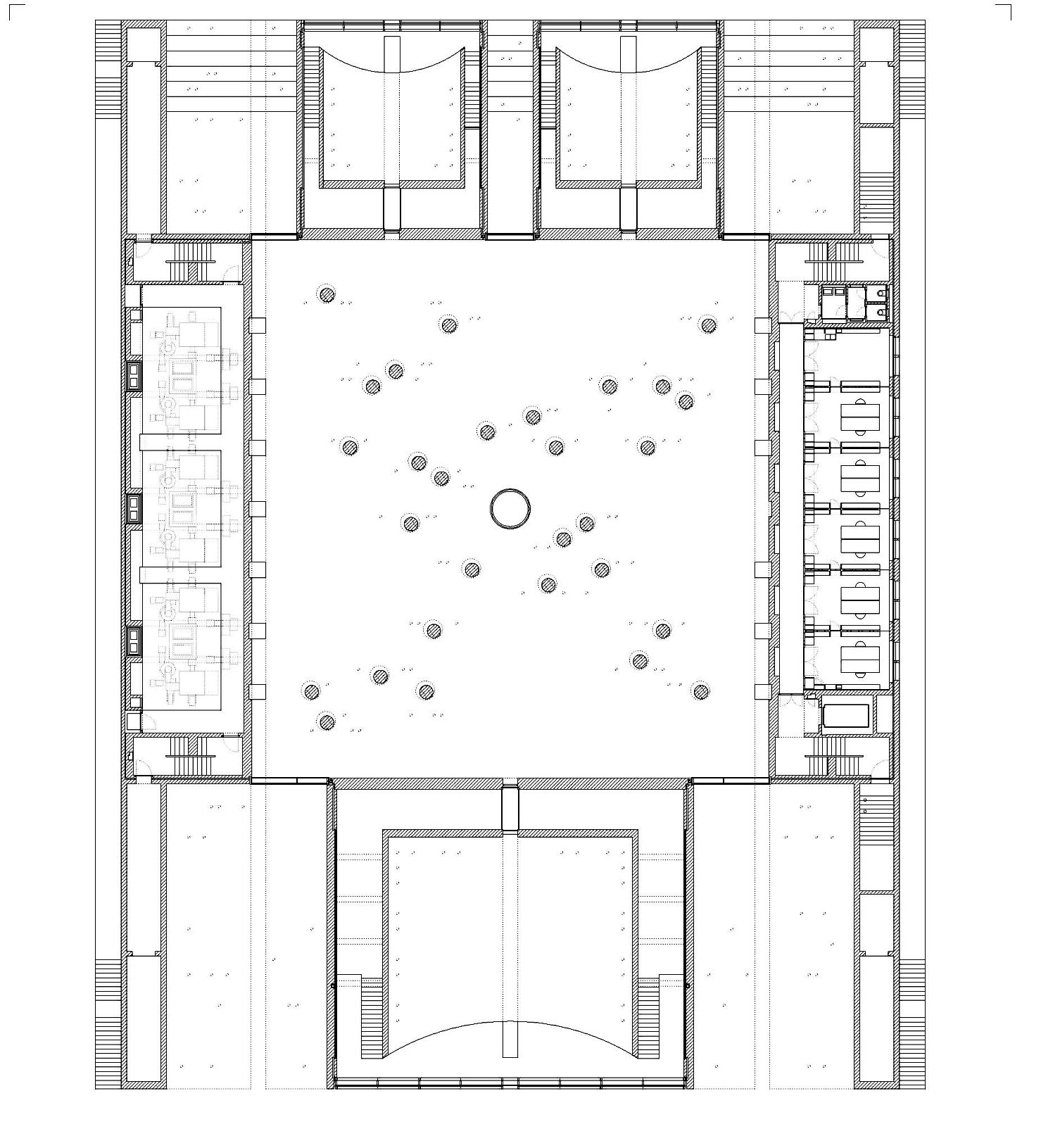
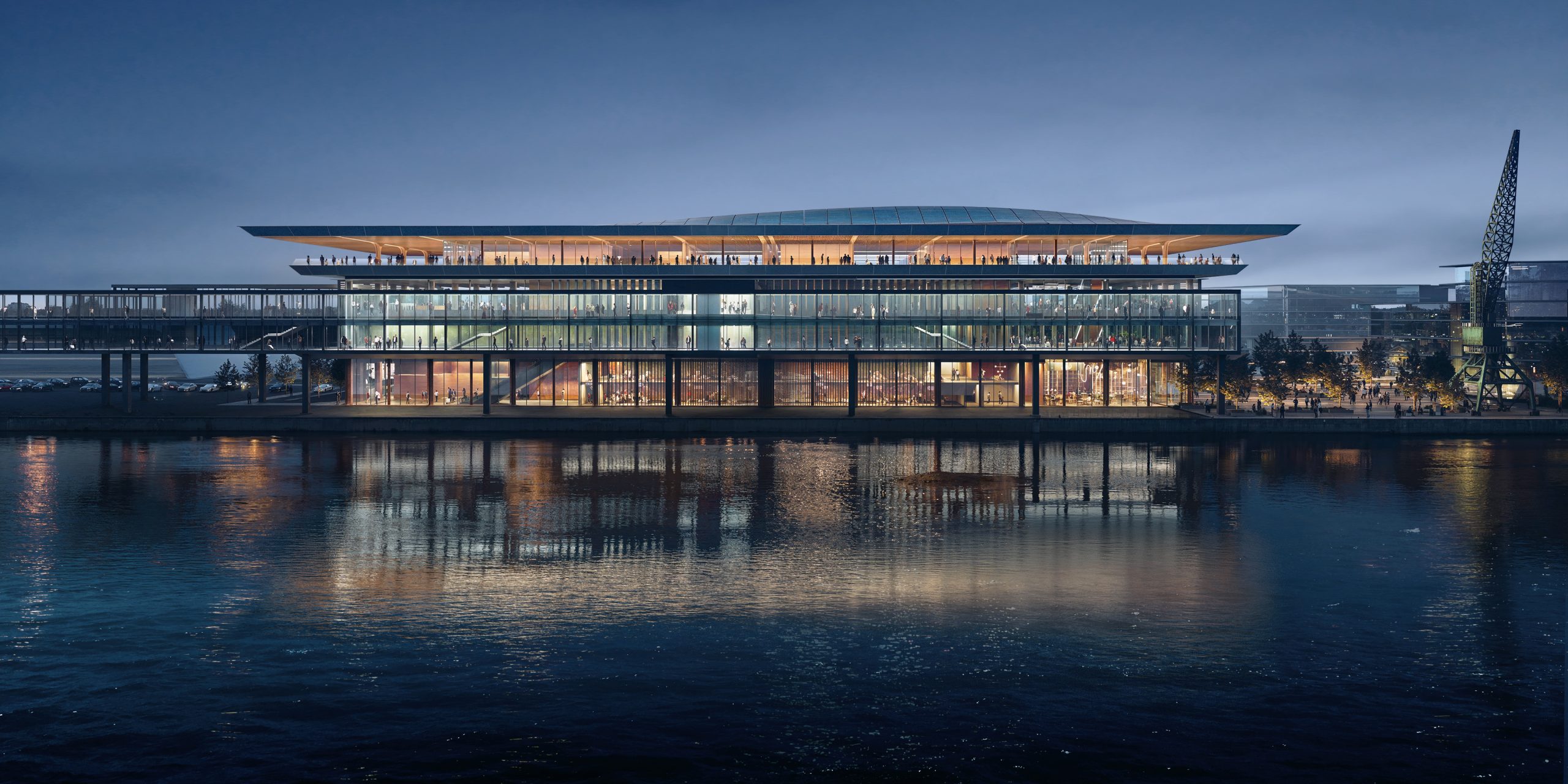
Winning entry by Markus Schietsch (Image ©Markus Schietsch Architekten)
If ever there was a pressing need for a facility acting as arrival feature and processing point for a world-renowned landmark structure, a Visitors Center for the Reichstag had to be at the top of the list.
Read more…
A Final Building Block for the Taichung Cultural Center
Night view of tower ©Elizabeth de Portzamparc
Everyone is well aware of the measures one encounters when entering almost any tower, residential or office, in this era of high security. We are not just talking about protecting the occupants of a residential
Read more…
with Stanley Collyer

Bundeskanzleramt Berlin Competition (1996); Completion (2000) Photo: courtesy Schultes Frank Architekten
COMPETITIONS: In our last conversation, we talked about the whole issue of Berlin’s identity and what approach one should use in reconstructing the urban fabric between East and West—where the wall used to be.
Axel Schultes: Maybe I learned something during a recent lecture I gave in Palermo (Italy). Afterwards, some German specialists in philosophy and German thinking—brilliant people, I must say—came up to me and said, ‘What you said about Berlin and what you are doing there with the Federal Chancellery (Bundeskanzleiamt), for us is what Ernst Bloch and Walter Benjamin talked about, especially when they looked at Italy and the cities in Italy. We noticed immediately in your work that (same) issue of porosity.’ Both used this term: Benjamin wrote a small article on Naples, and Bloch wrote about Italy as a whole.
We always had a tendency to avoid the term, ‘transparency.’ Transparency is usually the use of glass to make buildings less alienating to someone outside. But for us, glass is no material to create spaces; so transparency as we see it is depths of spaces or layering. Porosity is something much more precise—what we strive for. We wanted the same effect in Friedrichstrasse (Interior Mall): it should not be this close-up thing of the Galeries Lafayette (Jean Nouvel) or Ungers, where you only have some holes in it. Porosity for us is like a sponge—to enable a building to fill up with life, to turn a private space into a public one by penetrating it with a public space. The old buildings in Berlin are examples of this, with two, three, sometimes even four interior public spaces.
 
 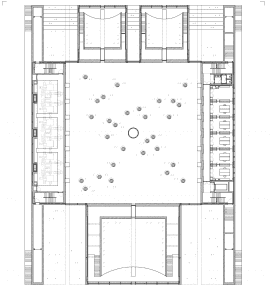
Berlin Baumschulenweg Crematory (1993)
COMPETITIONS: You are referring to the interior courtyards (Hinterhöfe)?
AS: Yes. Nothing of this sort exists anymore in Berlin. Most buildings (at the street) are flat, sometimes elegant, sometime ugly. The Galeries Lafayette, with all its glass, is as closed (to the outside) as one of Unger’s sandstone buildings. It’s the same issue in the construction of every building. Take, for instance, the Berlin Schloss (the palace in the center of Berlin), which was completely demolished after WWII, and which some people think should be resurrected. This has been on our mind constantly.*
It would be such a contrast to urbanism—needing to punch holes in it to get inside—open to all the people and all walks of life. I can give many examples of this, for me very northern, very restrained, very alien to everything which infuses a culture with life. All the people here like Kohlhof, Ungers, Kleihues, etc.; all have that tendency of closing. Even Libeskind—and maybe he doesn’t think about it or want to have it appear in such a manner—does it with the Jewish Museum where there is no penetration. There is always this hiding, this animosity to the urban fabric. They are not interested in breaking it up.

 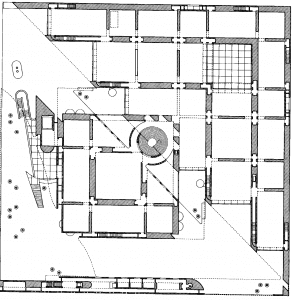
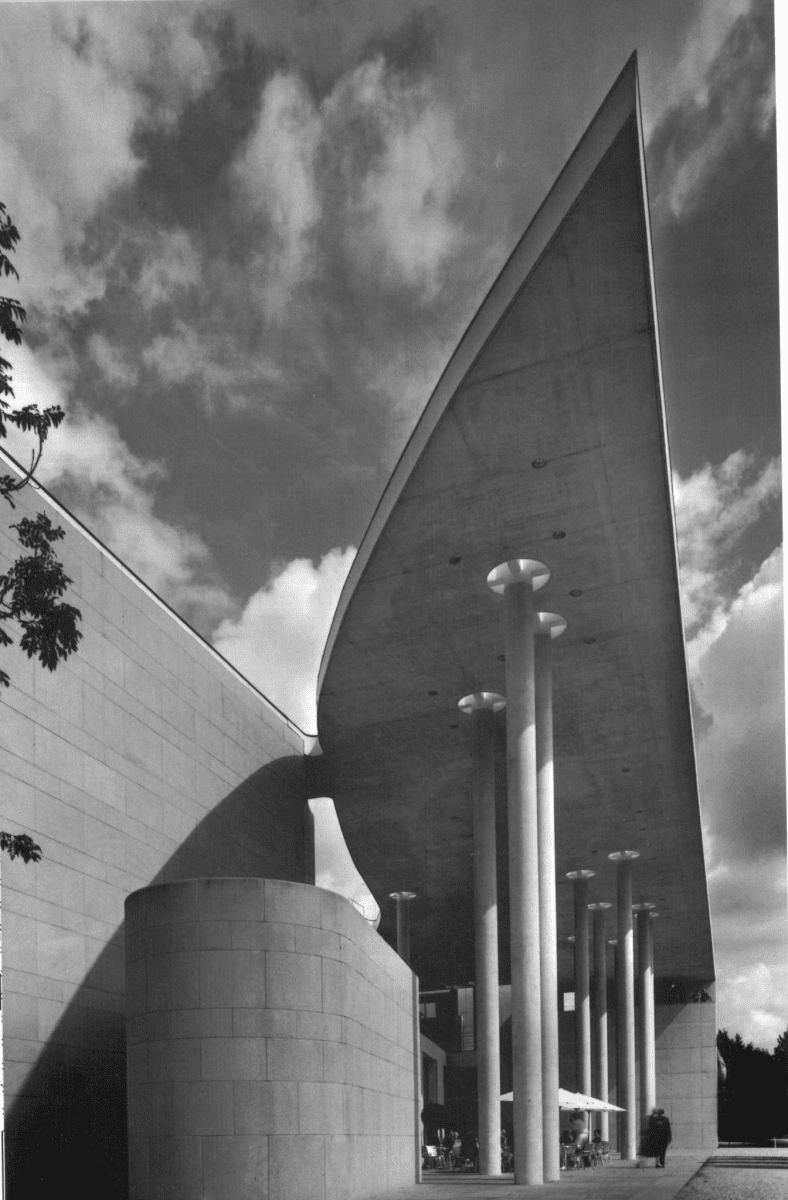
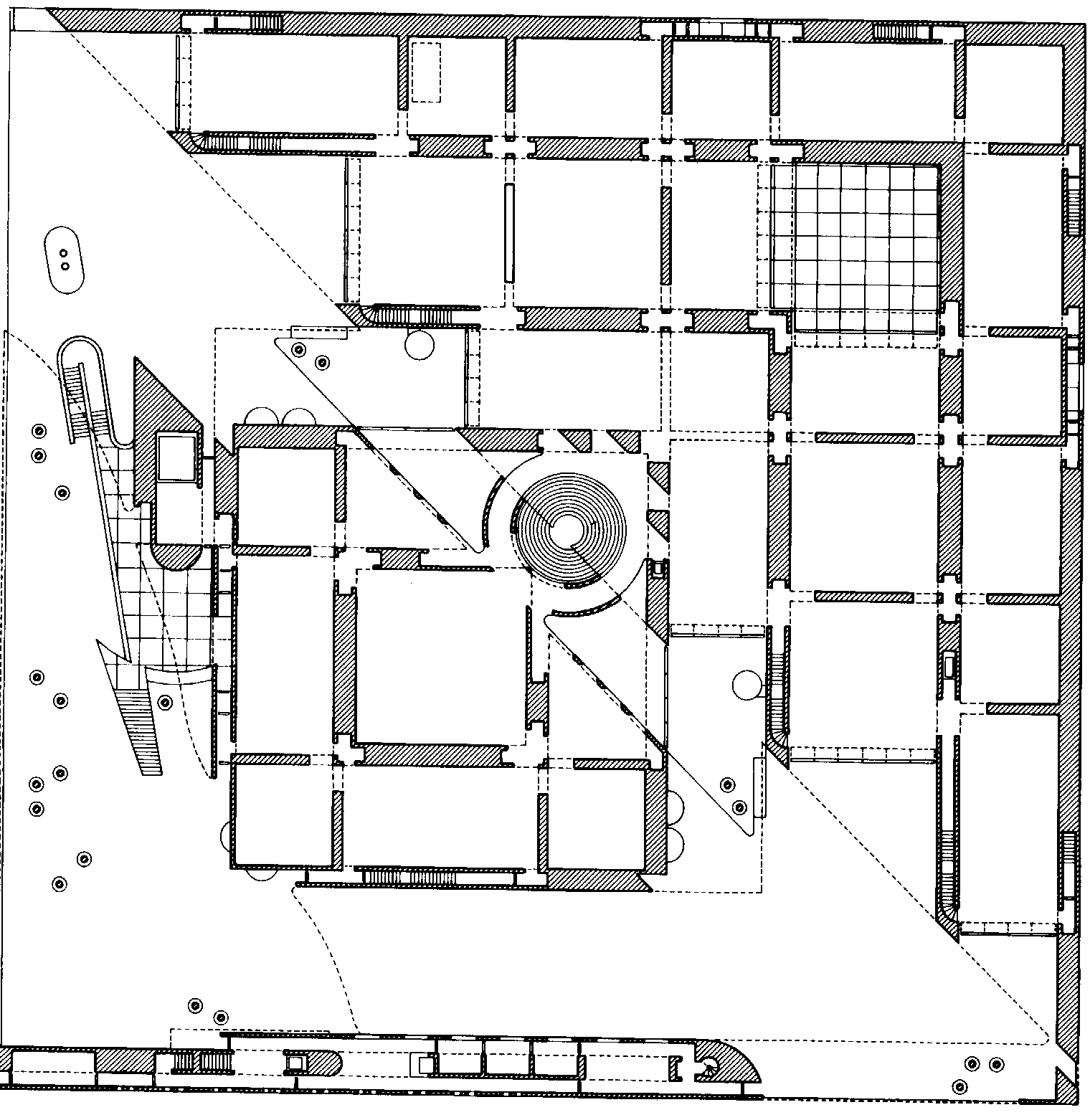
Bonn Art Museum – Competition (1985) Completion (1992)
Read more…
by Dan Madryga

Winning entry by Bjarke Ingels Group
Tirana, Albania might be the last place that many would associate with cutting edge architecture. The capital of a poor country still struggling to sweep away the lingering vestiges of the communist era, it is understandable that architecture and design have not always been a top priority. Yet in the face of the city’s struggles, Tirana is striving to reclaim and reshape its image and identity, and international design competitions are playing no small role in this movement. And while Tirana has yet to be associated with contemporary architecture, the implementation of these design competitions has introduced a handful of renowned architecture firms to the city with high hopes of bolstering the international image of Albania. In 2008, MVRDV won commission for a community master plan on Tirana Lake that will herald forward thinking, ecologically minded urban development. Earlier this year, Coop Himmelb(l)au won a competition for the new Albanian Parliament Building with a design intended to symbolize the transparency and openness of democracy. Most recently, Tirana can now add BIG (Bjarke Ingels Group) of Denmark to these ranks as the winner of the New Mosque and Museum of Tirana & Religious Harmony Competition, an ambitious project aimed to further rekindle a tattered Albanian cultural identity.
The recent efforts to renew and improve the physical image of Tirana can be attributed in large part to the city’s three-term mayor, Edi Rama. With his background as an artist, Rama has launched a number of initiatives over his decade in office, intent on improving the aesthetic image of Tirana. The design competition for the mosque and cultural complex can be viewed as the latest component of his “Return to Identity” project, which has gone to great lengths to remove the many unsightly and illegally constructed buildings that plague the city and help provide a clean slate for more progressive architecture and urban design.
The Mosque and Museum competition focuses on reclaiming a key religious and cultural identity that was long suppressed by communism. While Albania claims three chief religions—a Muslim majority alongside significant Orthodox Christian and Catholic communities—a strict communist regime ruthlessly banned religion. For over four decades, Albanians were under the thumb of an atheist regime where religious practitioners could face humiliation, imprisonment, and even torture and execution. The anti-religious campaign reached its zenith in the 1960s, when most Mosques and churches were demolished, and a select few with architectural significance were converted into warehouses, gymnasiums, and youth centers.
The revival of religious institutions began with the 1990 collapse of the communist regime. Yet decades of suppression took their toll, with the vestiges of Albania’s religious heritage essentially reduced to rubble. While the two Christian religions have since regained centers of worship, after twenty-one years of restored religious freedom, Tirana still lacks a mosque suitable for serving the sizable Muslim population. Only one mosque still stands in the central city—the historic Et’hem Bey Mosque—certainly a potent symbol of Tirana’s Islamic heritage, but particularly inadequate in size to accommodate the large numbers who would want to worship there on special occasions.
Hence emphasis in the brief concerning the size of the building: a grand mosque that can adequately serve 1000 prayers on normal days, 5000 on Fridays, and up to 10,000 during holy feasts. Supporting this mosque, the program also specifies the design of a Center of Islamic Culture that will house teaching, learning, and research facilities including a library, multipurpose hall, and seminar classrooms.
Another component of the competition program, the Museum of Tirana and Religious Harmony, moves beyond the realm of the Muslim community in an explicit gesture to bring together citizens from all faiths and backgrounds. Aside from presenting the general history of Tirana, the museum will focus on the city’s religious heritage, highlighting both the turbulent moment of suppression under communism as well as the religious harmony that has since been reinstated. Educating the public about Islamic culture and promoting religious tolerance at a time when relations between religious communities are strained throughout the world is certainly a noble objective.
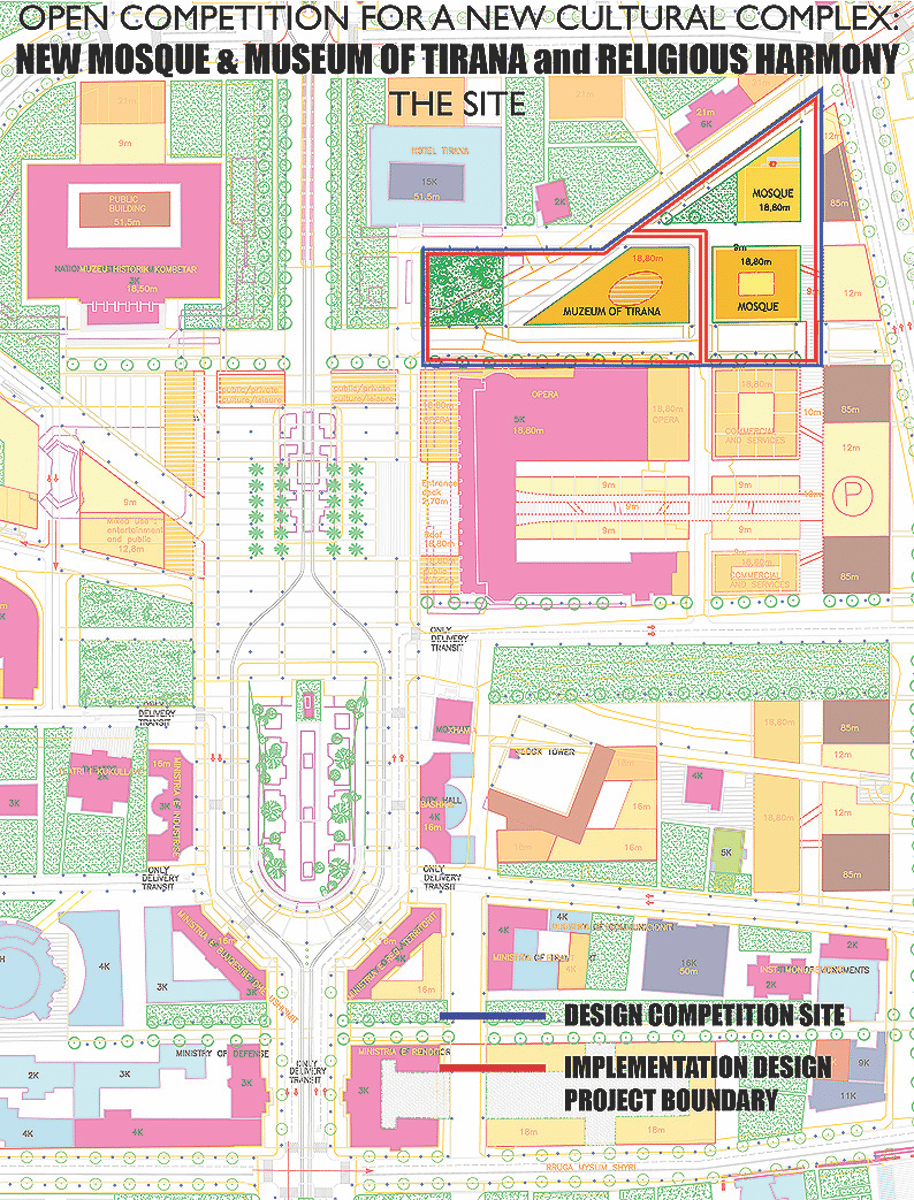
Underlining the importance of this project is its prominent site on Scanderbeg Square, the administrative and cultural center of Tirana where major government buildings share an expansive public space with museums and theaters. The square itself was the subject of a 2003 design competition that will eventually reclaim the urban center—at present a rather chaotic vehicular hub—as a pedestrian zone with a more human scale. Situated on triangular site adjacent to the Opera and Hotel Tirana, the Mosque and Cultural Center will be a highly visible component of Tirana’s urban landscape.
 
left: BIG site plan; right: rendering of Scanderbeg Square to appear after redesign (image by seARCH Architects)
The two-stage, international competition was organized by the City of Tirana and the Albanian Muslim community and advised by Nevat Sayin and Artan Hysa.
Over one hundred teams—the vast majority European—submitted qualifications for the first stage. In early March, the short-listing committee selected five teams to receive an honorarium of 45,000 Euros each to develop designs:
• Bjarke Ingels Group – Copenhagen, Denmark
• seARCH – Amsterdam, Holland
• Zaha Hadid Architects – London, UK
• Andreas Perea Ortega with NEXO – Madrid, Spain
• Architecture Studio – Paris, France
The designs were judged by a diverse European panel:
• Edi Rama – Mayor of Tirana, Albania
• Paul Boehm – architect, Cologne, Germany
• Vedran Mimica – Croatian architect; current director of the Berlage Institute
• Peter Swinnen – Partner and architect at 51N4E, Brussels
• Prof. Enzo Siviero – engineer; Professor at University IUAV, Venice
• Artan Shkreli – architect, Tirana, Albania
• Shyqyri Rreli – Muslim community representative
On 1 May 2011, the panel announced Bjarke Ingels Group (BIG) as the winner.
Read more…

©Markus Bonauer/Michael Bölling, Berlin with capattistaubach Landschaftsarchitekten
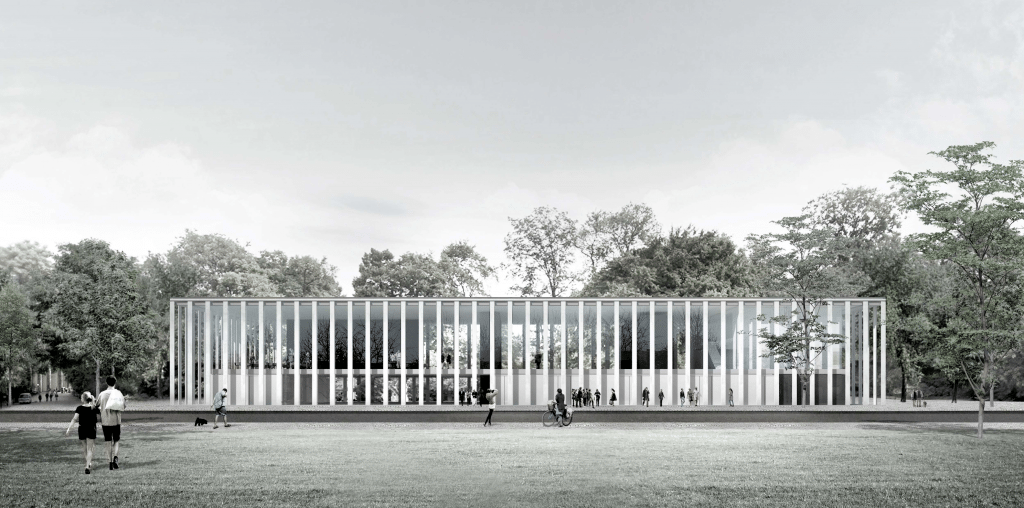
©Markus Schietsch Architekten GmbH mit Lorenz Engster Landschaftsarchitektur & Städtebau GmbH
After two rounds of judging, beginning with 187 entries from around the world, the jury reduced the number of competitors to 28 in the first round, then finally settled on two first-place finalists in the second stage, one of which will be commissioned to design the Center. (One may assume that the limited number of entries in such an important competition was limited by the fact that the competition language was held in German.) The building itself is not the only project element, as a tunnel linking the Visitors Center in the Tiergarten to the Reichstag also is an essential part of the plan. The total cost of the project to the government is to be limited to 150€M.
Winners (2)
• Markus Bonauer/Michael Bölling, Berlin with capattistaubach Landschaftsarchitekten
• Markus Schietsch, Zürich with Lorenz Eugster Landschaftsarchitektur & Städtebau GmbH

Site plan ©Markus Bonauer/Michael Bölling, Berlin with capattistaubach Landschaftsarchitekten

Site Plan ©Markus Schietsch Architekten GmbH mit Lorenz Engster Landschaftsarchitektur & Städtebau GmbH
Honorable Mentions (5)
• BGAA + FRPO Burgos & Garrido Arquitectos Asociados + FRPO Rodriguez & Oriol Arquitectos, Madrid (Spain) with VWA + UBERLAND, Vevey (Switzerland)
• bob-architektur BDA, Köln with FSWLA GmbH, Düsseldorf
• Henn GmbH, Berlin with Ingenieurgesellschaft BBP Bauconsulting mbH, Berlin
• Allmann Sattler Wappner Architekten GmbH, Munich with Schüller Landschaftsarchitekten, Munich
• ARGE KIM NALLEWEG Architekten und César Trujillo Moya, Berlin with TDB Landschaftsarchitektur Thomanek Duquesnoy Boemans Partnerschaft, Berlin
Read more…
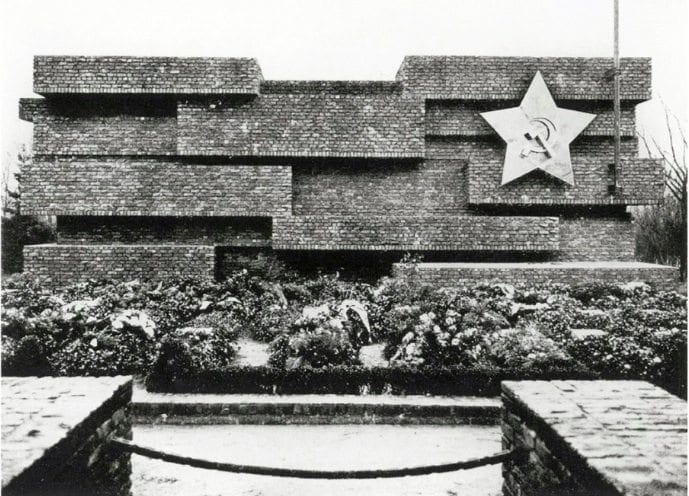
Rosa Luxemburg Memorial by Mies van der Rohe
Background
Given the history of Rosa Luxemburg as a founder of the Spartacus Bund, a precursor to the German Communist Party, it would seem peculiar to many outside of Germany that a foundation bearing her name would be one of the largest in Germany. Rosa Luxemburg, although born in Poland, became famous during World War I in Berlin as an anti-war activist. She was murdered during the Communist uprising against the German government in 1919. In 1926, Mies van der Rohe was commissioned to design a monument commemorating her and Karl Liebknecht, co-founders of the Spartacus Bund (above). The monument was later demolished by the Nazis in 1935 and never rebuilt. One promising attempt to rebuild the memorial was abandoned when Mies withdrew his support for it—no doubt a product of the Cold War at the time—and Mies’s experiences with the McCarthy hearings at the Un- American Activities Committee.
Read more…
|
San Jose’s Urban Confluence Winner Cancelled
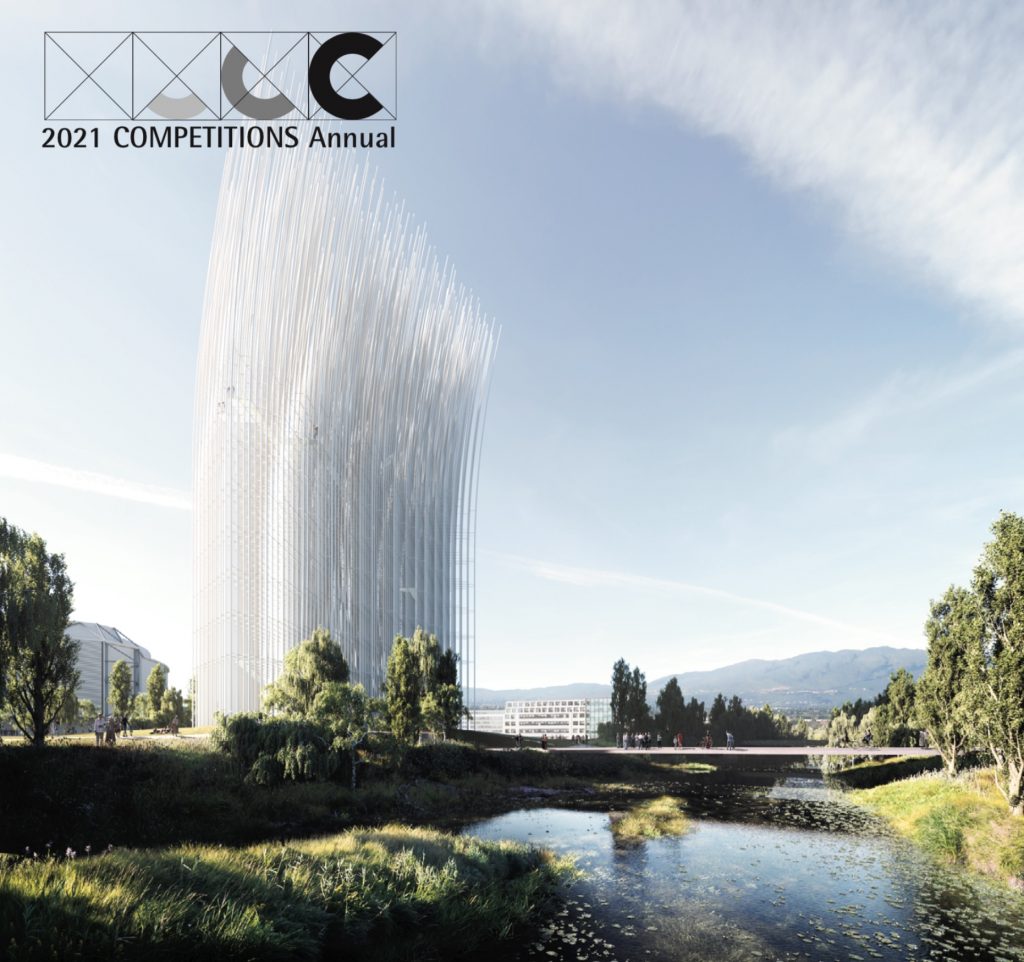
This week we received the news that the winning design for San Jose’s Urban Confluence competition by SMAR Architecture Studio has been cancelled. This comes after the original competition site was abandoned in favor of one more centrally located in downtown San Jose, Plaza de César Chávez. We can only assume that even this wasn’t enough to generate enough interest from major donors. From the very beginning of the competition, it appeared that the enthusiasm of those sponsoring the competition might be lacking links to potential donors with deep pockets—the hi-tech firms in Silicon Valley. After the competition resulted in a design that certainly entailed a major budget, the project had to be in trouble. The competition did produce a remarkable design; but this turned out to be another case where a competition, intended to generate enough public interest to fund a major project, came up short. -Ed
“A Museum for All”
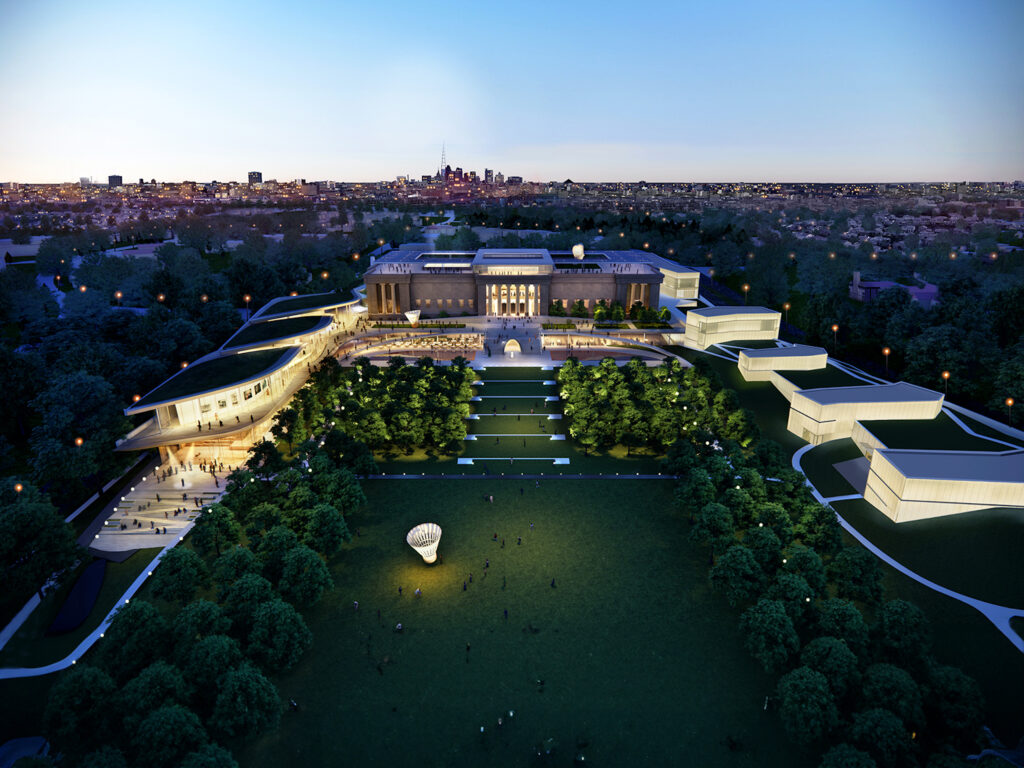
Winning entry by Weiss/Manfredi Landscape Architecture and Urbanism
Background
The Nelson-Atkins Museum of Art’s slogan “Creating a Museum for All” certainly reflects the efforts of many art museums to counter the notion that art museums exist primarily to cater to an elitist few. But one should note that this competition for an expansion of the museum’s capacity to serve a wider audience saw an initial step in this direction with the 1999 competition resulting in the Steven Holl addition, a series of pavilions stretching down one side of the large lawn area..
Read more…
Preparation and Organization of Design Competitions
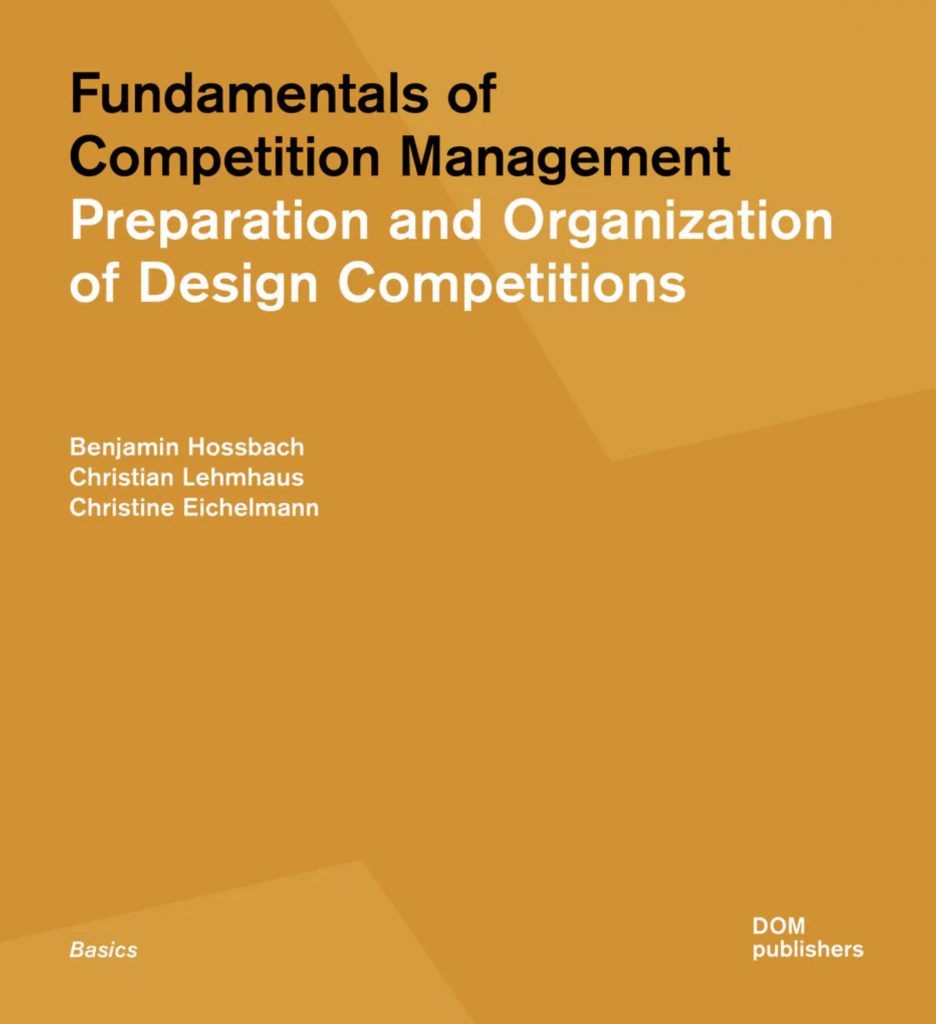
[phase 1] Benjamin Hossbach / Christian Lehmhaus / Christine Eichelmann
210 × 230 mm, 192 pp.
over 600 images
softcover
ISBN 978-3-86922-316-2 (English)
ISBN 978-3-86922-240-0 (German)
Dom Publishers
€48 in EU (For price abroad, see below)
Founded in 1998 in Berlin, Phase 1 has been a principal player in the organization and facilitation of design competitions, not only in Germany, but abroad as well. The accomplishments of the firm have been well documented in three volumes—The Architecture of Competitions—beginning in 2i006. Whereas these books mainly focused on the results of the competitions they have administered, the present work, Fundamentals of Competition Management, takes one from the very beginnings of the competition process to its conclusion. The authors envisioned the publication as “three three books in one: one „blue book“ with example projects, one „yellow book“ with statements and the „white book“ with the actual guideline to competition management.”
Although there have been a number of handbooks covering the administration of designcompetitions a study covering the entire process in such detail is a welcome addition to the the literature in this field. As a contribution to this important democratic process that has yielded exceptional design for decades, this volume is not only valid for Europe, but a current overview of the process for those globally who wish to raise the level of design by virtue of a design competition. -Ed
Foreign institutions wishing to obtain a copy of the book will recieve a discount to cover the cost of foreign shipping.
To obtain a copy for that offer, go to: accounting@phase1.de
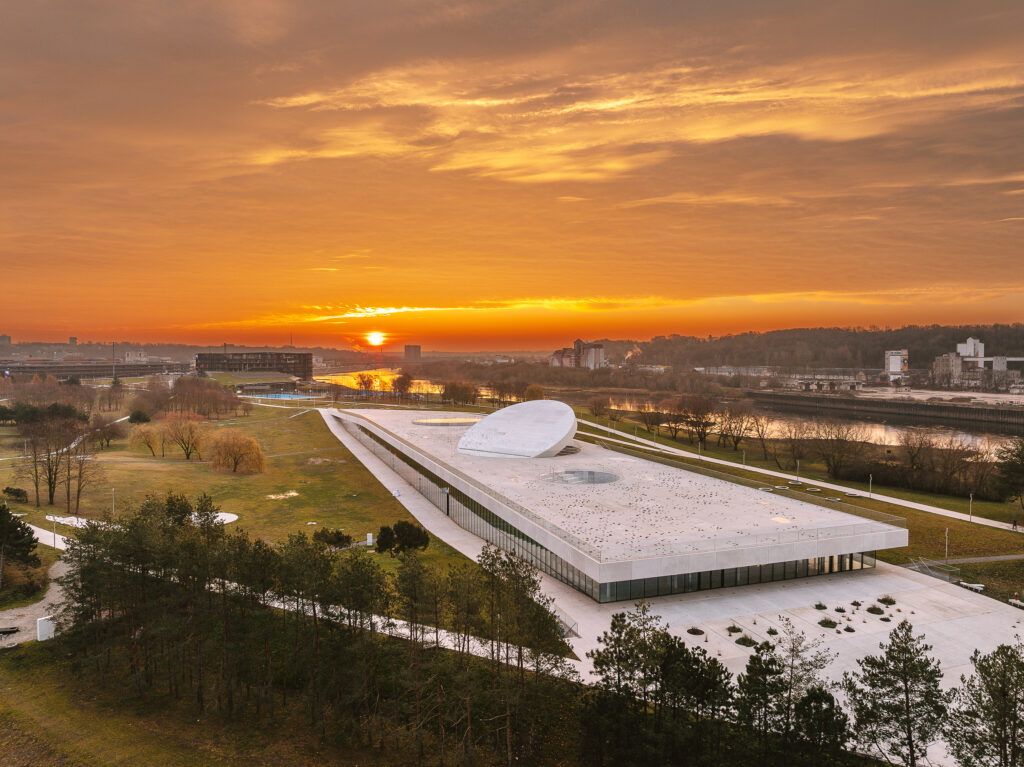
Since the recent realization of SMAR Architecture’s winning design we have now received images from a professional photo shoot. As an open competition for one of the more important projects in Europe at the time, we feel that full documentation of the process from start to finish was an important page in the history of architecture in the early 21st century. Documentation by us during the 2017 competition, with images from all finalists from the 144 entries is available at:
/competitions-static/2020/11/science-island-design-competition-finalists/
See more images…

Completed IMEX by Tuck Hinton Architects. Photo courtesy Anecdote
It is not often that we look back to a competition that occurred three decades ago that was also covered in detail by COMPETITIONS (Vol. 4, #4; pp. 14-27). What made the Chattanooga IMAX different back in 1994 was that the article covering that competition was authored by Prof. Marleen Davis, then Dean of the University of Tennessee’s School of Architecture and a member of the jury panel. This was not just a short article, covering the high points of the competition with a few talking points about the winning design. This 4,000+ word document also described in detail the jury’s observations about all the finalists, including the honorable mentions—one of the few times we have gained such a detailed glimpse in this country from the inside of the competition process.
Read more…
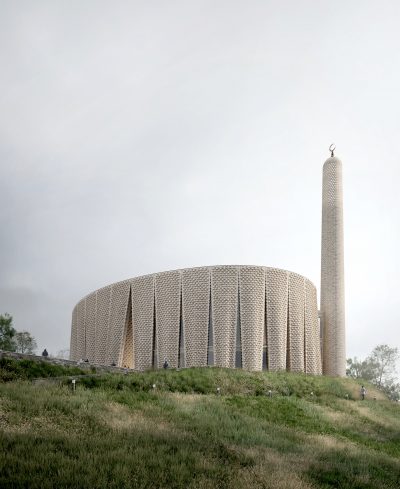
Winning entry by Luca Poian Forms Image ©Filippo Bolognese images
Good design seldom happens in a vacuum. And so it was with an international competition for a new mosque in Preston, U.K. A mid-sized city of 95,000, and located in Lancashire near the west coast and almost equally distant from London and Glasgow, Preston has a storied past, going all the way back to the Romans and the late Middle Ages, where it was the site of significant battles. During the Industrial Revolution, the city prospered, and it was not until after World War II that Preston experienced the British version of the U.S. Rust Belt. In the meantime, the city has experienced an upswing in economic activity, with an unemployment rate of only 3%. Aside from the appearance of new industries, the city has benefitted from the establishment of Central Lancashire University (CLU), which employs over 3,000 faculty and staff, and, as such, is one of the regions major employers. Any new university requires new facilities, and one of the most outstanding examples of this at CLU was the new Student Centre and Plaza, a result of a 2016 RIBA-sponsored competition won by Hawkins/Brown
Read More
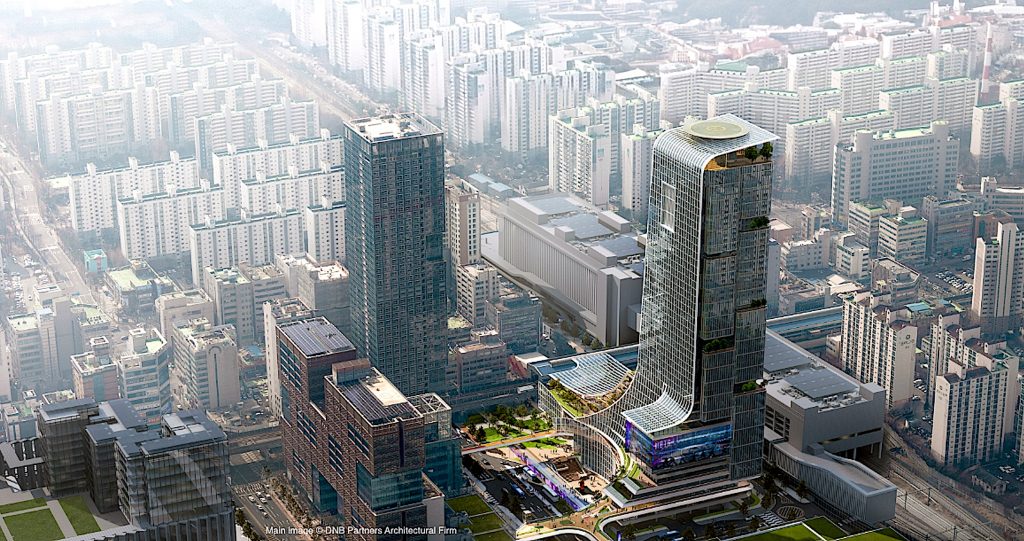
Changdong Station winner – image ©D & B Partners Architects
Whereas international competitions for real projects have become a rarity lately, Korea is a welcome exception. Among the plethora of competition announcements we receive almost weekly, several have ended with foreign firms as winners. But the history of welcoming international participants does go back several years. One notable early example was the Incheon Airport competition, won by Fentress Bradburn Architects (1962-70).
Among the more recent successes of foreign firms was the Busan Opera House competition, won by Snøhetta (2013-) and the Sejong Museum Gardens competition, won by Office OU, Toronto (2016-2023).
Read more…
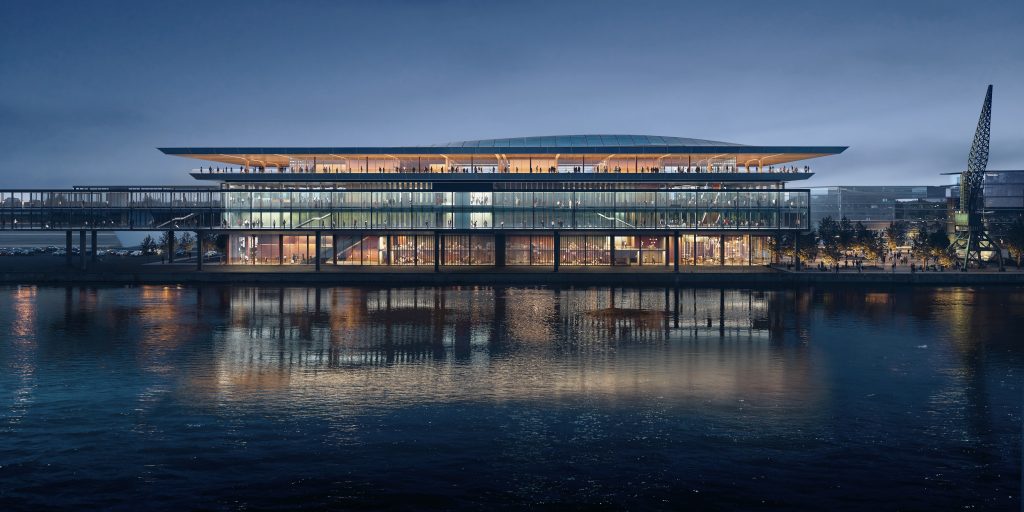
1st Place: Zaha Hadid Architects – night view from river – Render by Negativ
Arriving to board a ferry boat or cruise ship used to be a rather mundane experience. If you had luggage, you might be able to drop it off upon boarding, assuming that the boarding operation was sophisticated enough. In any case, the arrival experience was nothing to look forward to. I recall boarding the SS United States for a trip to Europe in the late 1950s. Arriving at the pier in New York, the only thought any traveler had was to board that ocean liner as soon as possible, find one’s cabin, and start exploring. If you were in New York City and arriving early, a nearby restaurant or cafe would be your best bet while passing time before boarding.
Read more…
|