An Adventure of the First Order
The Tintagel Castle Bridge Design Competition

©William Matthews Associates; courtesy MRC
Out-of-the-way places can be serious destinations, especially when they embody an object of historical significance. The medieval Tintagel Castle site is certainly one of these examples, attracting scores of visitors every year. Although only now a ruin, its history, linked to the tales of King Arthur, is certainly the tale which can be of interest to any serious English history buff. But getting to the crest of the hill cliff where it is located is only something for the hardy. The problem has been the steep ascent to the site, which could only be reached via a circuitous winding pathway. To address this issue, a new bridge in a more advantageous location was proposed to replace an existing, somewhat rickety span.
Organized by Malcolm Reading Consultants, this competition’s call for expressions of interest drew 137 responses, with six firms being shortlisted for the design competition phase. At the conclusion of the adjudication process, the jury announced the team of Ney & Partners with William Matthews Associates as winners. The other finalists, without ranking, were:
- Dietmar Feichtinger Architectes with Terrell
- Marks Barfield Architects with Flint and Neill J&L Gibbons LLP and Mola
- Niall McLaughlin Architects with Price and Myers
- RFR and Jean-Francois Blassel Architecte with Engineershrw and WSP
- WilkinsonEyre with Atelier One
Read more…

If you are flying either into or departing from Taiwan after the year 2020, you may
wish to arrange your flight so that you either arrive or leave in the evening, as it could well be an unforgettable experience. The winning design by Rogers Stirk Harbour of London for the new Terminal 3 promises an illuminating show that can match that of Curt Fentress’s Denver airport.
As an international open competition, and for a project of this magnitude, it was astonishing to find that only four international firms decided to enter this contest. According to one juror, the posting of a $500,000 bond required of serious contenders was probably enough to scare off most firms. This is not to say that the final four lacked expertise in the area. The only firm from Stage 1 not shortlisted, ADPI of Paris, had numerous completed large commissions to its credit. And due to the very extensive experience of the other firms, it could be anticipated that the quality of the entries would be more than adequate.
Read more…

by Eric Goldemberg
DawnTown, an annual architectural ideas competition since 2007, has become a huge success. Attracting over hundred entries from more than 20 countries in 2010, this quest to bring innovative architecture to Downtown Miami has become a staple in the international design community. Its latest installment, the 2010 DawnTown Seaplane
Read more…

by Stanley Collyer

Image: ©Reiser+Umemoto RUR with Fei & Cheng Associates’ winning design (model perspective)
Many buildings in close proximity to bodies of water seem to have that joie de vivre about them. Whether it is Sea Ranch, The Bilbao Guggenheim, Oslo Opera House or summer residences in the Hamptons, the proximity of water somehow manages to stimulate designers to produce excitement in a relaxed atmosphere. From the Greek temples to Spas in England, construction of major structures on oceans and rivers was always more likely to reflect modern trends in architecture, rather than simply replicating a style from the past. Recent waterfront projects such as the Yokohama International Port Terminal—a competition won by Foreign Office Architects—and Canada Place in Vancouver are examples of cities recognizing the need to push the envelope when redesigning port terminal facilities. So it was with the results of the Kaohsiung Port and Cruise Service Center competition .
Not only is Kaohsiung a major port facility on the island, it is seen as a major terminal for future water transit to the Chinese mainland. The goal of the competition was to identify a design that will enhance the travel experience of passengers, make it a principal departure destination for cruise ships, and provide recreational opportunities for the local populace. Moreover, it is understood that the new facility should add to the urban vitality of the immediate vicinity.

Aerial view of site
The Site
The entire Harbor site consists of an area measuring 6+ hectares, of which only 2.6 hectares was designated as the competition site for the project’s first phase. As might be expected, the site included two berths for ocean liners. Since the program was quite extensive, the major challenge was to design a facility which would fit well into a rather limited site, but present a friendly face both to the city and from the water.
Similar to many recent international competitions in Taiwan administered by competition adviser, Barry Cheng, this one was conducted in two stages, with five finalists advancing to the second stage for the ultimate prize—an $80M commission. The seven-member jury did have an international flavor, most notably Maximiliano Fuksas (Italy), Hisao Kohyama (Japan), and Hitoshi Abe (USA). During stage two, only six jurors provided comments, as Maximiliano Fuksas could not attend the final session. The five premiated finalists chosen by the first-stage panel and their final rankings after the second stage were:
• First Prize
Reiser+Umemoto RUR Architecture PC, New York, NY
with Fei & Cheng Associates/Philip T.C. Fei, Taiwan
• Second Prize
Asymptote Architecture, New York, NY
with Artech Architects/Kris Yao, Taiwan
• Third Prize
Ricky Liu & Associates Architects+Planners, Taiwan
with Takenaka Corporation/Masahiro Morita, Japan
• Honorable Mention-1
JET Architecture Inc./Edward Kim. Canada
with CXT Architects Inc./Dan Teh, Canada and Archasia Design Group/Sao-You, Taiwan
• Honorable Mention-2
HMC Group Inc. / Raymond Pan, Los Angeles, California
with HOY Architects & Associates/Charles Hsueh, Taiwan
Read more…
|
San Jose’s Urban Confluence Winner Cancelled
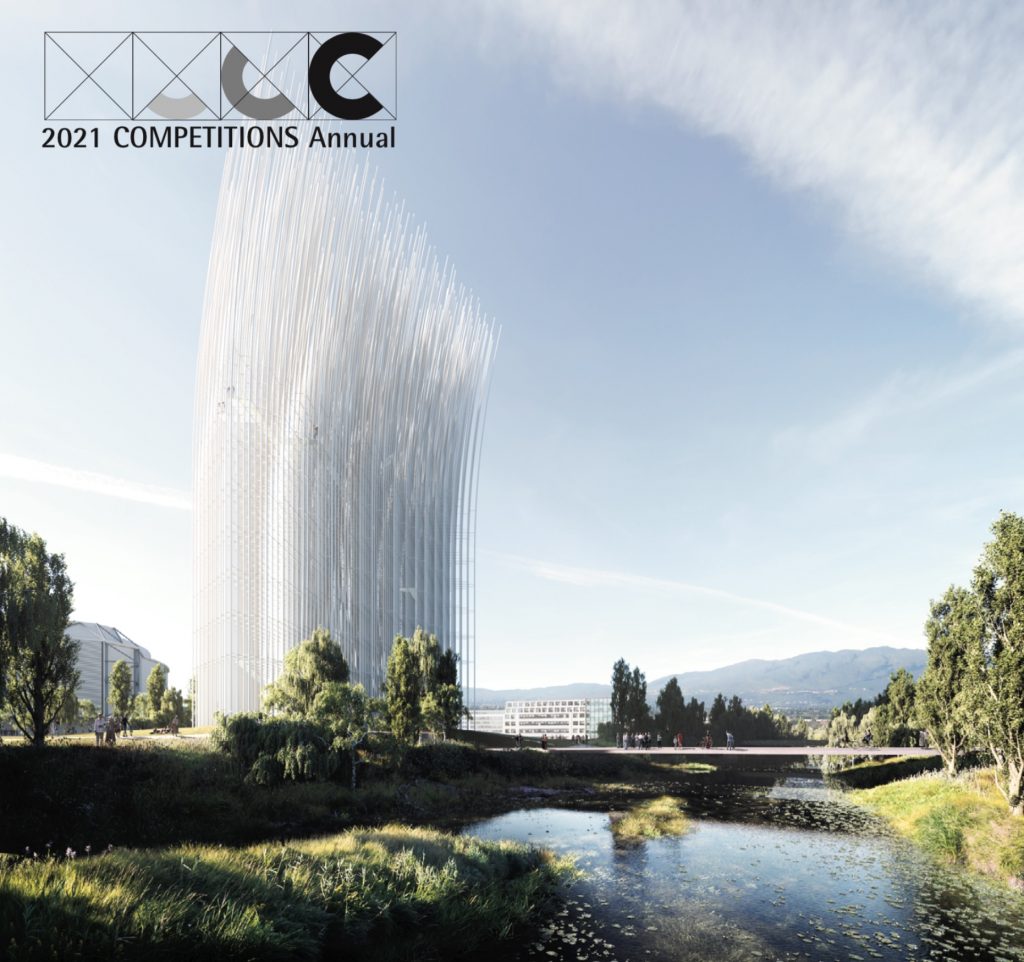
This week we received the news that the winning design for San Jose’s Urban Confluence competition by SMAR Architecture Studio has been cancelled. This comes after the original competition site was abandoned in favor of one more centrally located in downtown San Jose, Plaza de César Chávez. We can only assume that even this wasn’t enough to generate enough interest from major donors. From the very beginning of the competition, it appeared that the enthusiasm of those sponsoring the competition might be lacking links to potential donors with deep pockets—the hi-tech firms in Silicon Valley. After the competition resulted in a design that certainly entailed a major budget, the project had to be in trouble. The competition did produce a remarkable design; but this turned out to be another case where a competition, intended to generate enough public interest to fund a major project, came up short. -Ed
“A Museum for All”
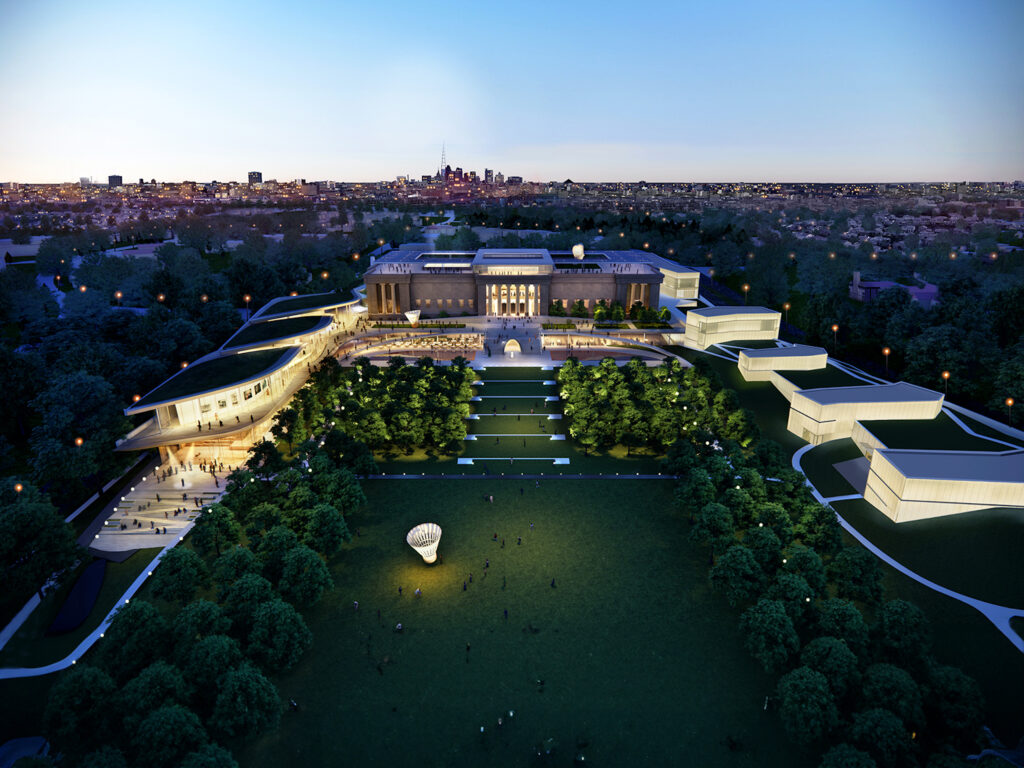
Winning entry by Weiss/Manfredi Landscape Architecture and Urbanism
Background
The Nelson-Atkins Museum of Art’s slogan “Creating a Museum for All” certainly reflects the efforts of many art museums to counter the notion that art museums exist primarily to cater to an elitist few. But one should note that this competition for an expansion of the museum’s capacity to serve a wider audience saw an initial step in this direction with the 1999 competition resulting in the Steven Holl addition, a series of pavilions stretching down one side of the large lawn area..
Read more…
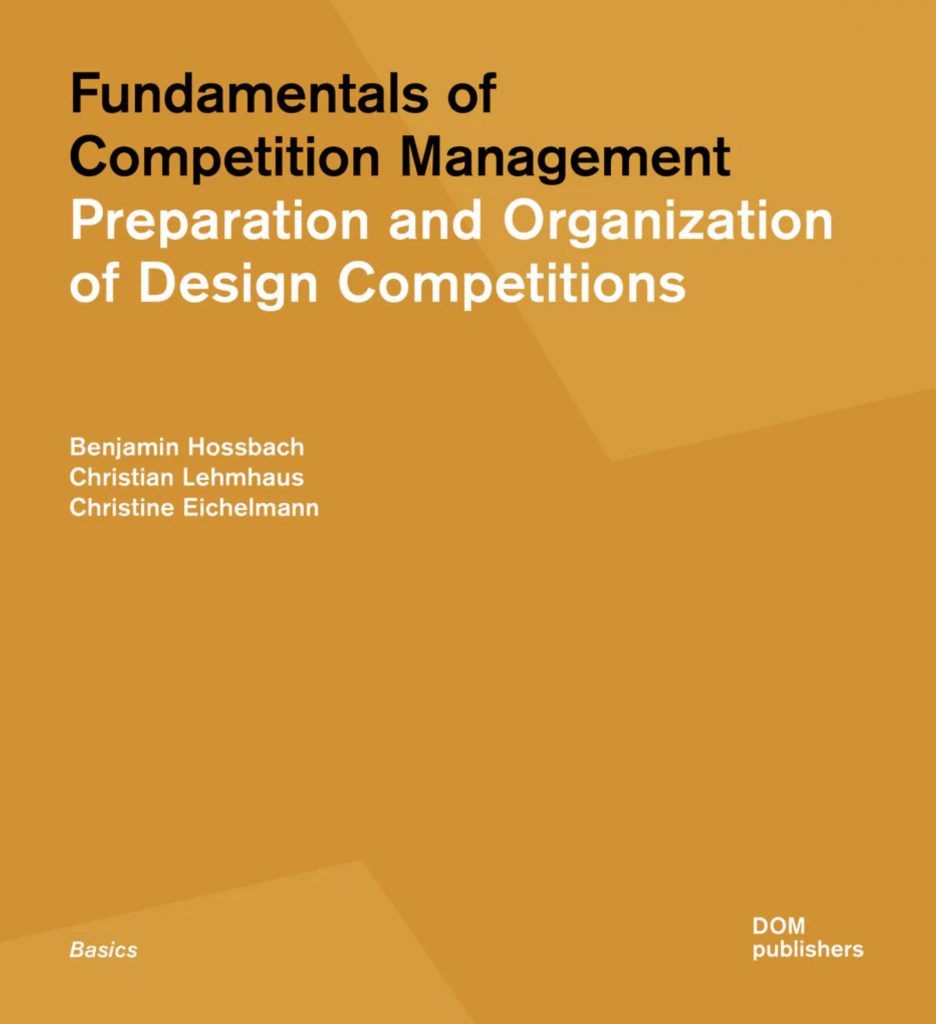
Preparation and Organization of Design Competitions
[phase 1] Benjamin Hossbach / Christian Lehmhaus / Christine Eichelmann
210 × 230 mm, 192 pp.
over 600 images
softcover
ISBN 978-3-86922-316-2 (English)
ISBN 978-3-86922-240-0 (German)
Dom Publishers
€48 in EU (For price abroad, see below)
Founded in 1998 in Berlin, Phase 1 has been a principal player in the organization and facilitation of design competitions, not only in Germany, but abroad as well. The accomplishments of the firm have been well documented in three volumes—The Architecture of Competitions—beginning in 2i006. Whereas these books mainly focused on the results of the competitions they have administered, the present work, Fundamentals of Competition Management, takes one from the very beginnings of the competition process to its conclusion. The authors envisioned the publication as “three three books in one: one „blue book“ with example projects, one „yellow book“ with statements and the „white book“ with the actual guideline to competition management.”
Although there have been a number of handbooks covering the administration of designcompetitions a study covering the entire process in such detail is a welcome addition to the the literature in this field. As a contribution to this important democratic process that has yielded exceptional design for decades, this volume is not only valid for Europe, but a current overview of the process for those globally who wish to raise the level of design by virtue of a design competition. -Ed
Foreign institutions wishing to obtain a copy of the book will recieve a discount to cover the cost of foreign shipping.
To obtain a copy for that offer, go to: accounting@phase1.de
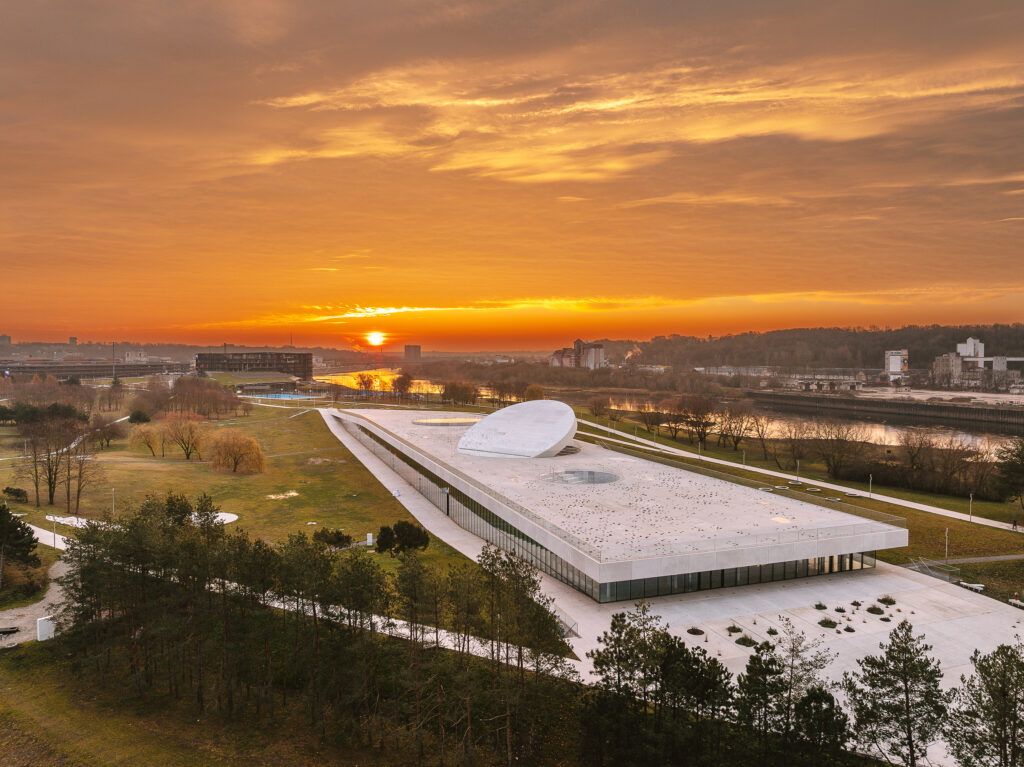
Since the recent realization of SMAR Architecture’s winning design we have now received images from a professional photo shoot. As an open competition for one of the more important projects in Europe at the time, we feel that full documentation of the process from start to finish was an important page in the history of architecture in the early 21st century. Documentation by us during the 2017 competition, with images from all finalists from the 144 entries is available at:
/competitions-static/2020/11/science-island-design-competition-finalists/
See more images…

Completed IMEX by Tuck Hinton Architects. Photo courtesy Anecdote
It is not often that we look back to a competition that occurred three decades ago that was also covered in detail by COMPETITIONS (Vol. 4, #4; pp. 14-27). What made the Chattanooga IMAX different back in 1994 was that the article covering that competition was authored by Prof. Marleen Davis, then Dean of the University of Tennessee’s School of Architecture and a member of the jury panel. This was not just a short article, covering the high points of the competition with a few talking points about the winning design. This 4,000+ word document also described in detail the jury’s observations about all the finalists, including the honorable mentions—one of the few times we have gained such a detailed glimpse in this country from the inside of the competition process.
Read more…
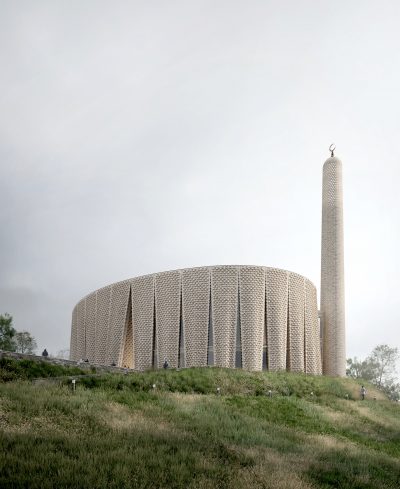
Winning entry by Luca Poian Forms Image ©Filippo Bolognese images
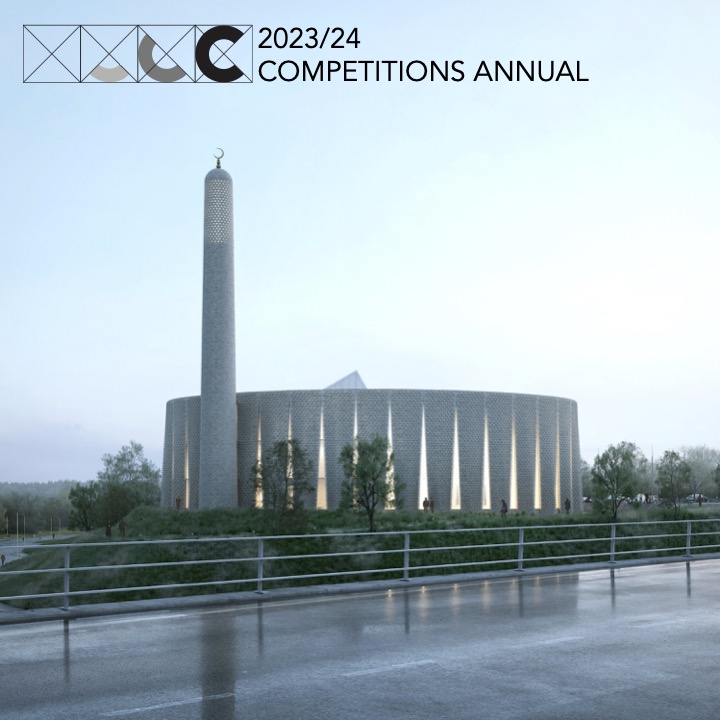
Good design seldom happens in a vacuum. And so it was with an international competition for a new mosque in Preston, U.K. A mid-sized city of 95,000, and located in Lancashire near the west coast and almost equally distant from London and Glasgow, Preston has a storied past, going all the way back to the Romans and the late Middle Ages, where it was the site of significant battles. During the Industrial Revolution, the city prospered, and it was not until after World War II that Preston experienced the British version of the U.S. Rust Belt. In the meantime, the city has experienced an upswing in economic activity, with an unemployment rate of only 3%. Aside from the appearance of new industries, the city has benefitted from the establishment of Central Lancashire University (CLU), which employs over 3,000 faculty and staff, and, as such, is one of the regions major employers. Any new university requires new facilities, and one of the most outstanding examples of this at CLU was the new Student Centre and Plaza, a result of a 2016 RIBA-sponsored competition won by Hawkins/Brown
Read More
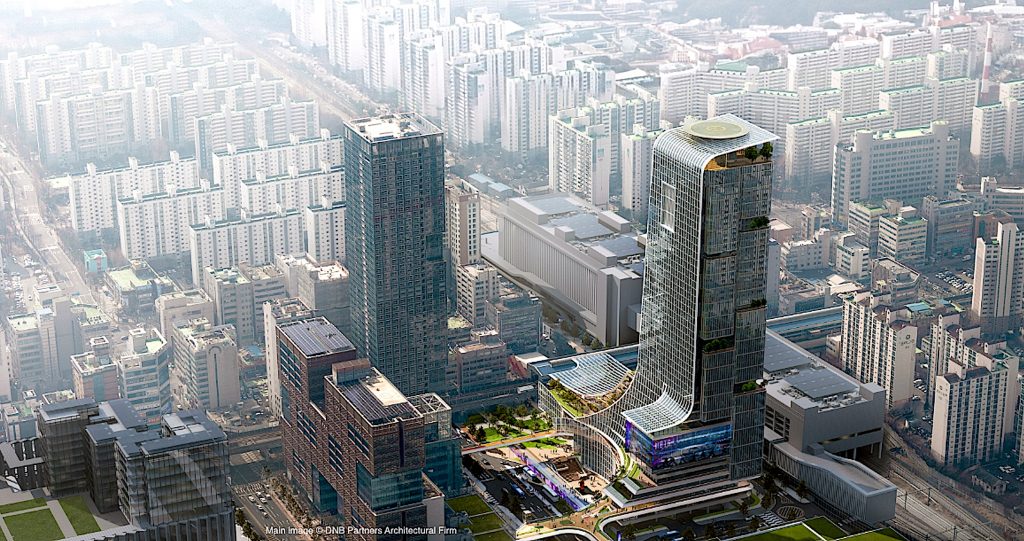
Changdong Station winner – image ©D & B Partners Architects
Whereas international competitions for real projects have become a rarity lately, Korea is a welcome exception. Among the plethora of competition announcements we receive almost weekly, several have ended with foreign firms as winners. But the history of welcoming international participants does go back several years. One notable early example was the Incheon Airport competition, won by Fentress Bradburn Architects (1962-70).
Among the more recent successes of foreign firms was the Busan Opera House competition, won by Snøhetta (2013-) and the Sejong Museum Gardens competition, won by Office OU, Toronto (2016-2023).
Read more…
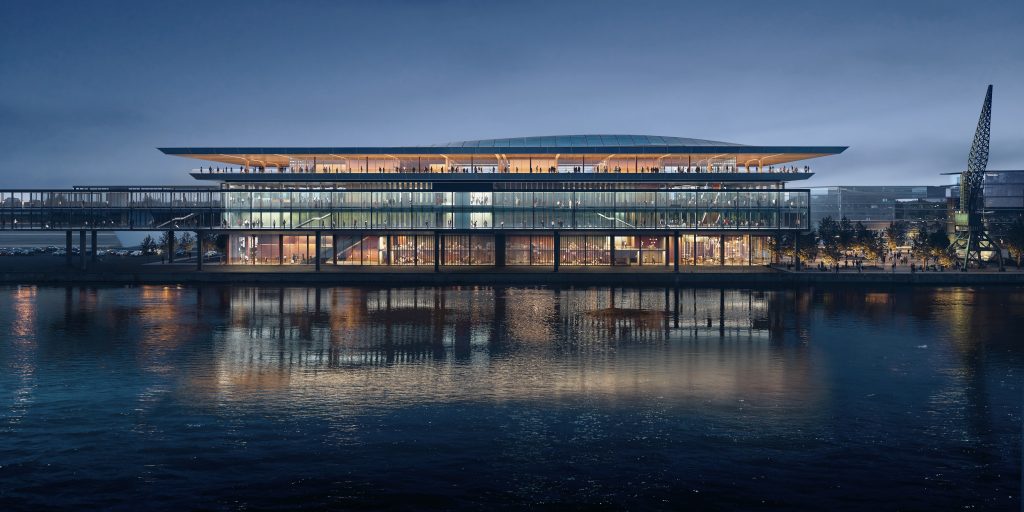
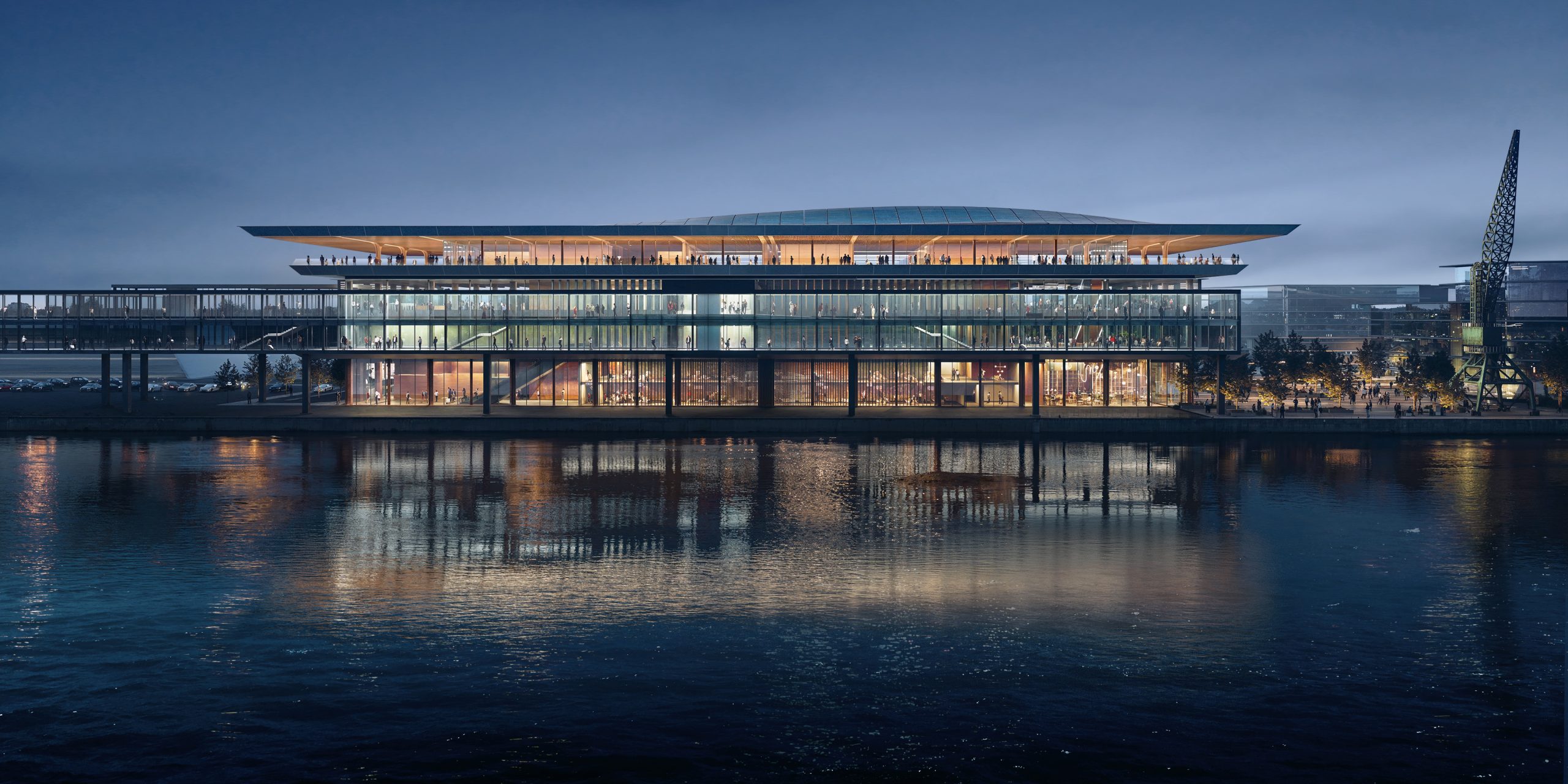
1st Place: Zaha Hadid Architects – night view from river – Render by Negativ
Arriving to board a ferry boat or cruise ship used to be a rather mundane experience. If you had luggage, you might be able to drop it off upon boarding, assuming that the boarding operation was sophisticated enough. In any case, the arrival experience was nothing to look forward to. I recall boarding the SS United States for a trip to Europe in the late 1950s. Arriving at the pier in New York, the only thought any traveler had was to board that ocean liner as soon as possible, find one’s cabin, and start exploring. If you were in New York City and arriving early, a nearby restaurant or cafe would be your best bet while passing time before boarding.
Read more…
|