Sponsors: OCBA in collaboration with University of Geneva Competition management: FISCHER MONTAVON + ASSOCIES Architectes-Urbanistes SA Type: open, international, two-stage Fee: none Language: French Eligibility: WTO, Switzerland Timetable: 12. September 2024 – Stage 1 entry submission 27. September 2024 – Model submission 10. March 2025 – Stage 2 entry submission 04.
Read more…
Museum site
Competition facilitator: ADM, Helsinki and State Real Estate Company Location: Helsinki, Finland Type: Open, International, two-stage Language: English Fee: none Eligibility: Licensed architect (lead architect must have Masters Degree) (See competition brief for clarification of eligibility) Timetable: 24 April 2024 – Competition seminar (A link to submitting
Read more…
Sponsor: Abercrombie & Kent Facilitator: RIBA Type: Open, International, one-stage Location: Masai Mara, Kenya Eligibility: Registered architects Fee: £50+VAT Timetable: 18 June 2024 – Documents submission deadline Process: A shortlist of five designs will be presented to the judging panel, which includes members of A&K Travel Group, the Mara
Read more…
Architecture at Zero’s 2024 ideas competition is for the design of a middle school building for a campus in East Los Angeles. Deadline for entries is December 16, 2024.
For more information and to enter the competition, go to: architectureatzero.com
Read more…
Aerial view of site; courtesy City of Columbus, Indiana
Client: City of Columbus (IN) and the Columbus Redevelopment Commission Facilitator: Columbus Design Institute Type: RFQ, one-stage, interview process Eligibility: teams of design professionals Language: English Budget: $450,000 of which no more than $50,000 allotted for design Timetable February 22,
Read more…
Overview The North Boulder Creative Campus brings together two distinct projects to create an artistic hub for the community: (1) an iconic facility for BMoCA, which will be the cultural anchor of the campus; (2) the broader cultural campus including housing options for diverse needs; live work spaces supporting a range of creative practices; and
Read more…
Sponsor: “SHAK” (Architectural Service to the Capital) Type: International, open, one-stage Location: Kolovicë, Pristina, Kosovo Eligibility: no limitations on accreditation (All applications are anonymous and are referred to only by a unique serial number assigned during submission.) Languages: English, Albanian Fee: none Timetable: 17 January 2024 – Registration deadline 6 March
Read more…
Seoul Housing & Communities Corporation aims to create a new concept of mixed-use facility at the District 2 site within the Changdong Urban Development Zone, integrating public transportation transit facilities, apartment buildings, office facilities, and commercial facilities. In order to select the optimal design plan in terms of functionality, architectural innovation,
Read more…
Competition organizer: Arquine, Mexico City Type: Open, International, one-stage with realization (Arquine will also be responsible for carrying out the production and construction of the winning project in coordination with this year’s winning team.) Languages: Spanish, English Fee: MXN1,500 (approximately US$87) per team Eligibility: Architects, planners, professionals/students
Read more…
Sponsor: Cracow University of Technology and CUT Faculty of Architecture Type: open, Student, Ideas Eligibility: Available to BArch and MArch students in the EU, U.K. and Switzerland Fee: none Languages: Polish, English Timetable: 15 December 2023 – Registration deadline 22 January 2024 – Submission deadline 30 January 2024 – Announcement of results Awards: A
Read more…
|
San Jose’s Urban Confluence Winner Cancelled
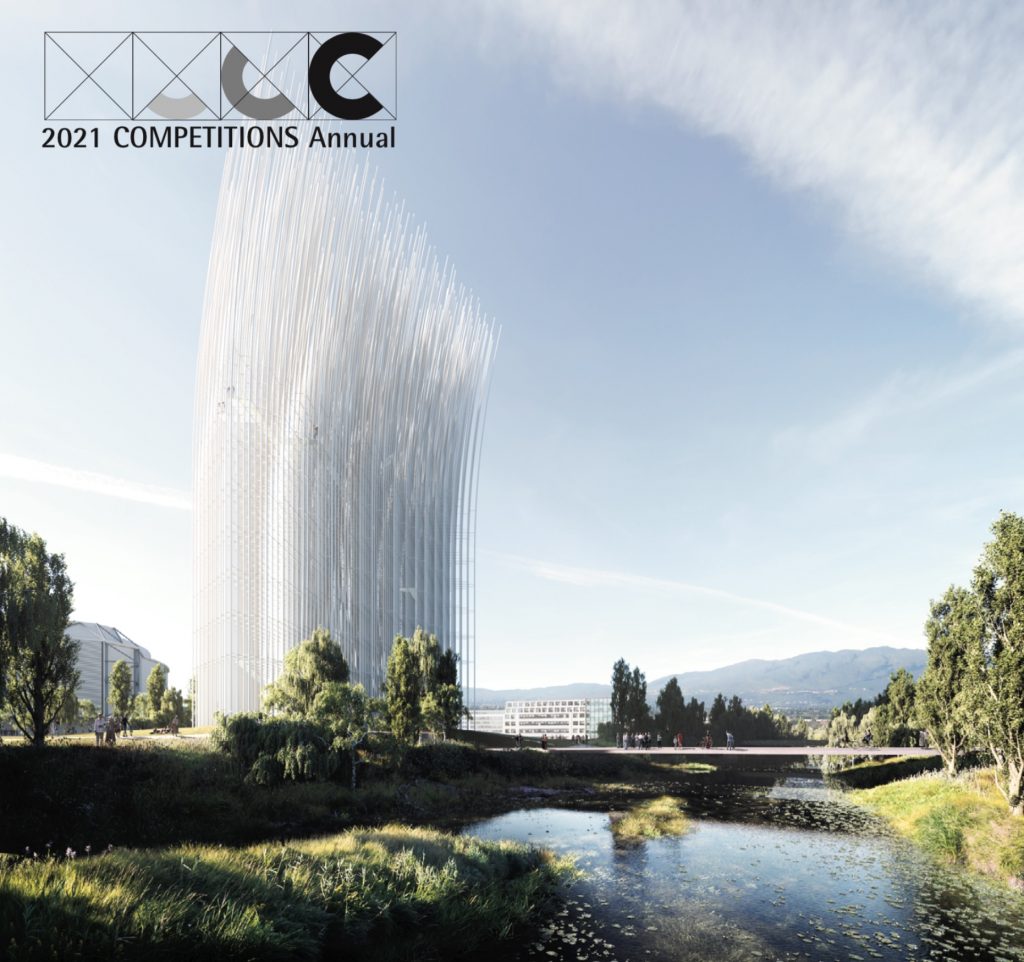
This week we received the news that the winning design for San Jose’s Urban Confluence competition by SMAR Architecture Studio has been cancelled. This comes after the original competition site was abandoned in favor of one more centrally located in downtown San Jose, Plaza de César Chávez. We can only assume that even this wasn’t enough to generate enough interest from major donors. From the very beginning of the competition, it appeared that the enthusiasm of those sponsoring the competition might be lacking links to potential donors with deep pockets—the hi-tech firms in Silicon Valley. After the competition resulted in a design that certainly entailed a major budget, the project had to be in trouble. The competition did produce a remarkable design; but this turned out to be another case where a competition, intended to generate enough public interest to fund a major project, came up short. -Ed
“A Museum for All”
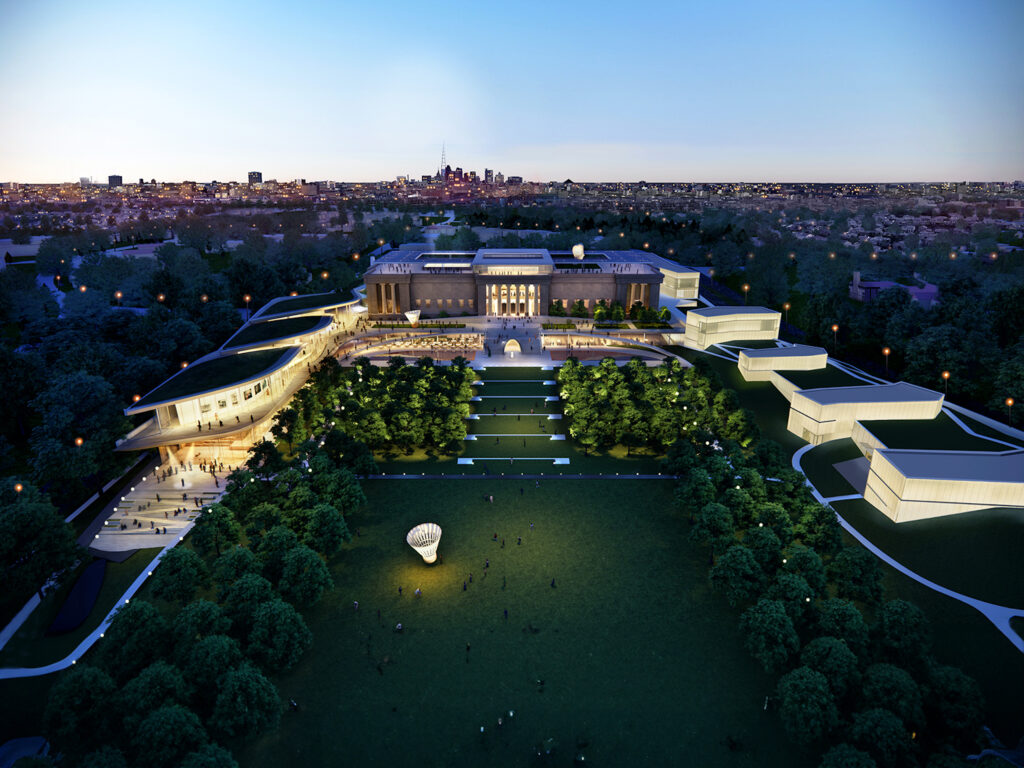
Winning entry by Weiss/Manfredi Landscape Architecture and Urbanism
Background
The Nelson-Atkins Museum of Art’s slogan “Creating a Museum for All” certainly reflects the efforts of many art museums to counter the notion that art museums exist primarily to cater to an elitist few. But one should note that this competition for an expansion of the museum’s capacity to serve a wider audience saw an initial step in this direction with the 1999 competition resulting in the Steven Holl addition, a series of pavilions stretching down one side of the large lawn area..
Read more…
Preparation and Organization of Design Competitions
[phase 1] Benjamin Hossbach / Christian Lehmhaus / Christine Eichelmann
210 × 230 mm, 192 pp.
over 600 images
softcover
ISBN 978-3-86922-316-2 (English)
ISBN 978-3-86922-240-0 (German)
Dom Publishers
€48 in EU (For price abroad, see below)
Founded in 1998 in Berlin, Phase 1 has been a principal player in the organization and facilitation of design competitions, not only in Germany, but abroad as well. The accomplishments of the firm have been well documented in three volumes—The Architecture of Competitions—beginning in 2i006. Whereas these books mainly focused on the results of the competitions they have administered, the present work, Fundamentals of Competition Management, takes one from the very beginnings of the competition process to its conclusion. The authors envisioned the publication as “three three books in one: one „blue book“ with example projects, one „yellow book“ with statements and the „white book“ with the actual guideline to competition management.”
Although there have been a number of handbooks covering the administration of designcompetitions a study covering the entire process in such detail is a welcome addition to the the literature in this field. As a contribution to this important democratic process that has yielded exceptional design for decades, this volume is not only valid for Europe, but a current overview of the process for those globally who wish to raise the level of design by virtue of a design competition. -Ed
Foreign institutions wishing to obtain a copy of the book will recieve a discount to cover the cost of foreign shipping.
To obtain a copy for that offer, go to: accounting@phase1.de
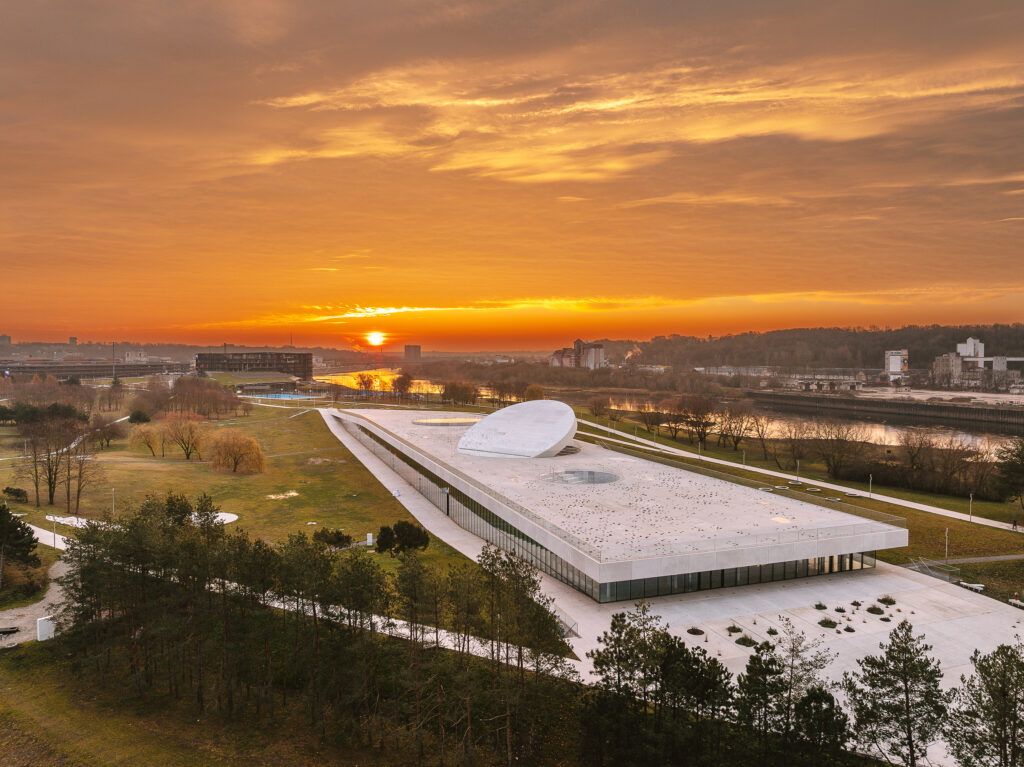
Since the recent realization of SMAR Architecture’s winning design we have now received images from a professional photo shoot. As an open competition for one of the more important projects in Europe at the time, we feel that full documentation of the process from start to finish was an important page in the history of architecture in the early 21st century. Documentation by us during the 2017 competition, with images from all finalists from the 144 entries is available at:
/competitions-static/2020/11/science-island-design-competition-finalists/
See more images…

Completed IMEX by Tuck Hinton Architects. Photo courtesy Anecdote
It is not often that we look back to a competition that occurred three decades ago that was also covered in detail by COMPETITIONS (Vol. 4, #4; pp. 14-27). What made the Chattanooga IMAX different back in 1994 was that the article covering that competition was authored by Prof. Marleen Davis, then Dean of the University of Tennessee’s School of Architecture and a member of the jury panel. This was not just a short article, covering the high points of the competition with a few talking points about the winning design. This 4,000+ word document also described in detail the jury’s observations about all the finalists, including the honorable mentions—one of the few times we have gained such a detailed glimpse in this country from the inside of the competition process.
Read more…
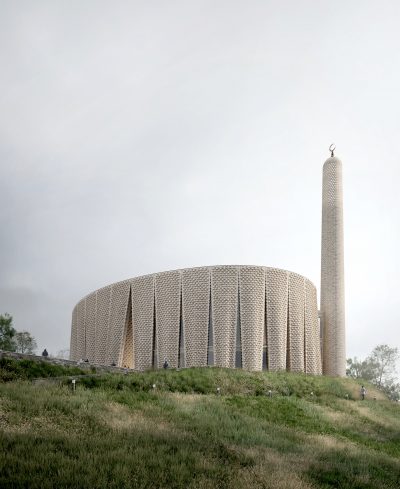
Winning entry by Luca Poian Forms Image ©Filippo Bolognese images
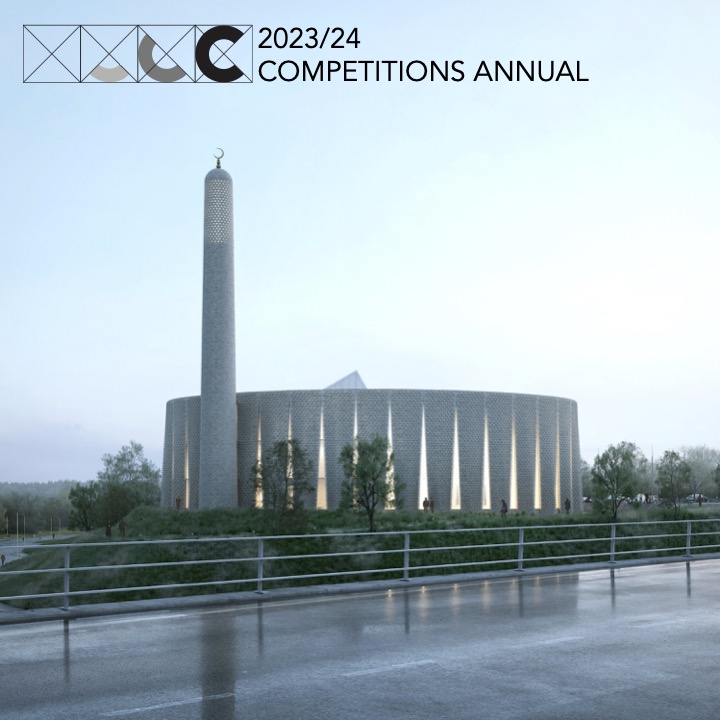
Good design seldom happens in a vacuum. And so it was with an international competition for a new mosque in Preston, U.K. A mid-sized city of 95,000, and located in Lancashire near the west coast and almost equally distant from London and Glasgow, Preston has a storied past, going all the way back to the Romans and the late Middle Ages, where it was the site of significant battles. During the Industrial Revolution, the city prospered, and it was not until after World War II that Preston experienced the British version of the U.S. Rust Belt. In the meantime, the city has experienced an upswing in economic activity, with an unemployment rate of only 3%. Aside from the appearance of new industries, the city has benefitted from the establishment of Central Lancashire University (CLU), which employs over 3,000 faculty and staff, and, as such, is one of the regions major employers. Any new university requires new facilities, and one of the most outstanding examples of this at CLU was the new Student Centre and Plaza, a result of a 2016 RIBA-sponsored competition won by Hawkins/Brown
Read More
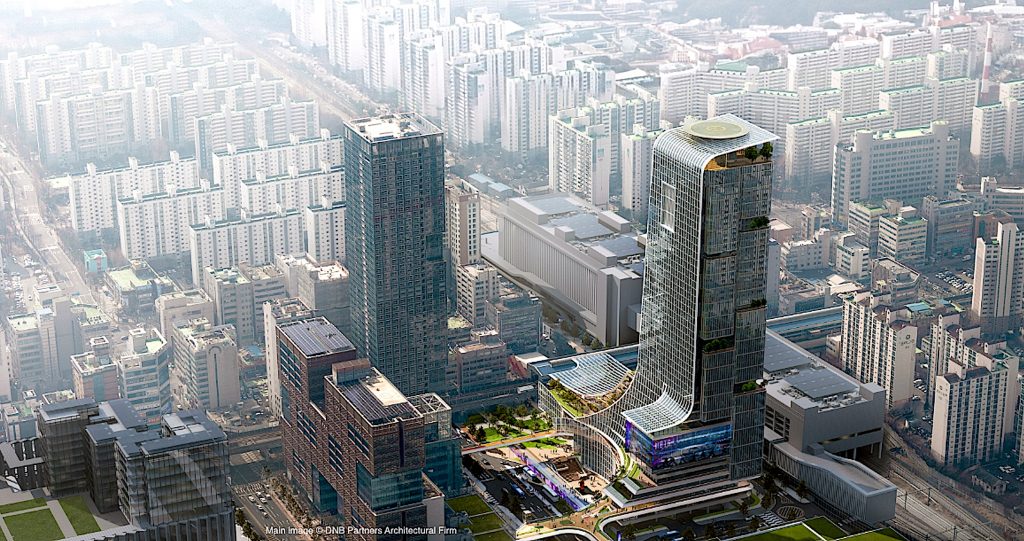
Changdong Station winner – image ©D & B Partners Architects
Whereas international competitions for real projects have become a rarity lately, Korea is a welcome exception. Among the plethora of competition announcements we receive almost weekly, several have ended with foreign firms as winners. But the history of welcoming international participants does go back several years. One notable early example was the Incheon Airport competition, won by Fentress Bradburn Architects (1962-70).
Among the more recent successes of foreign firms was the Busan Opera House competition, won by Snøhetta (2013-) and the Sejong Museum Gardens competition, won by Office OU, Toronto (2016-2023).
Read more…
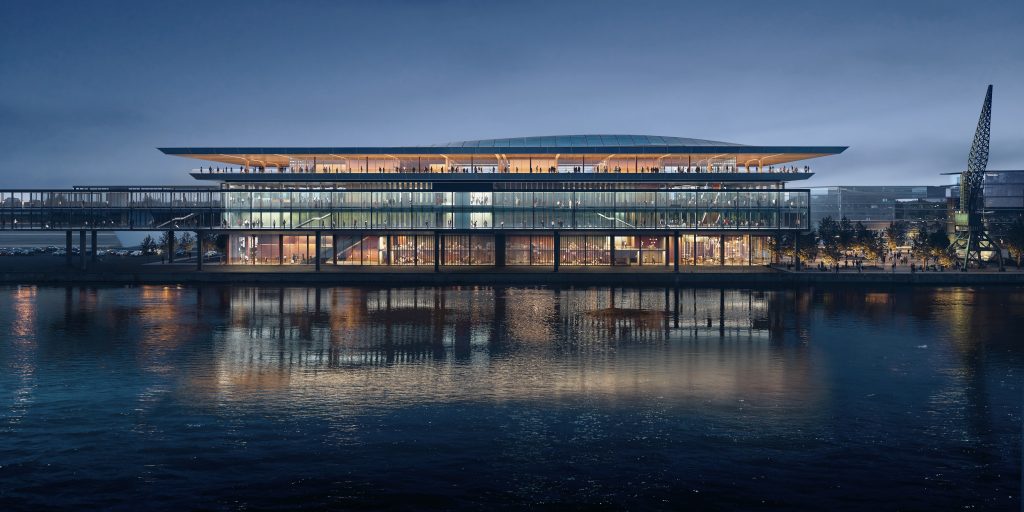
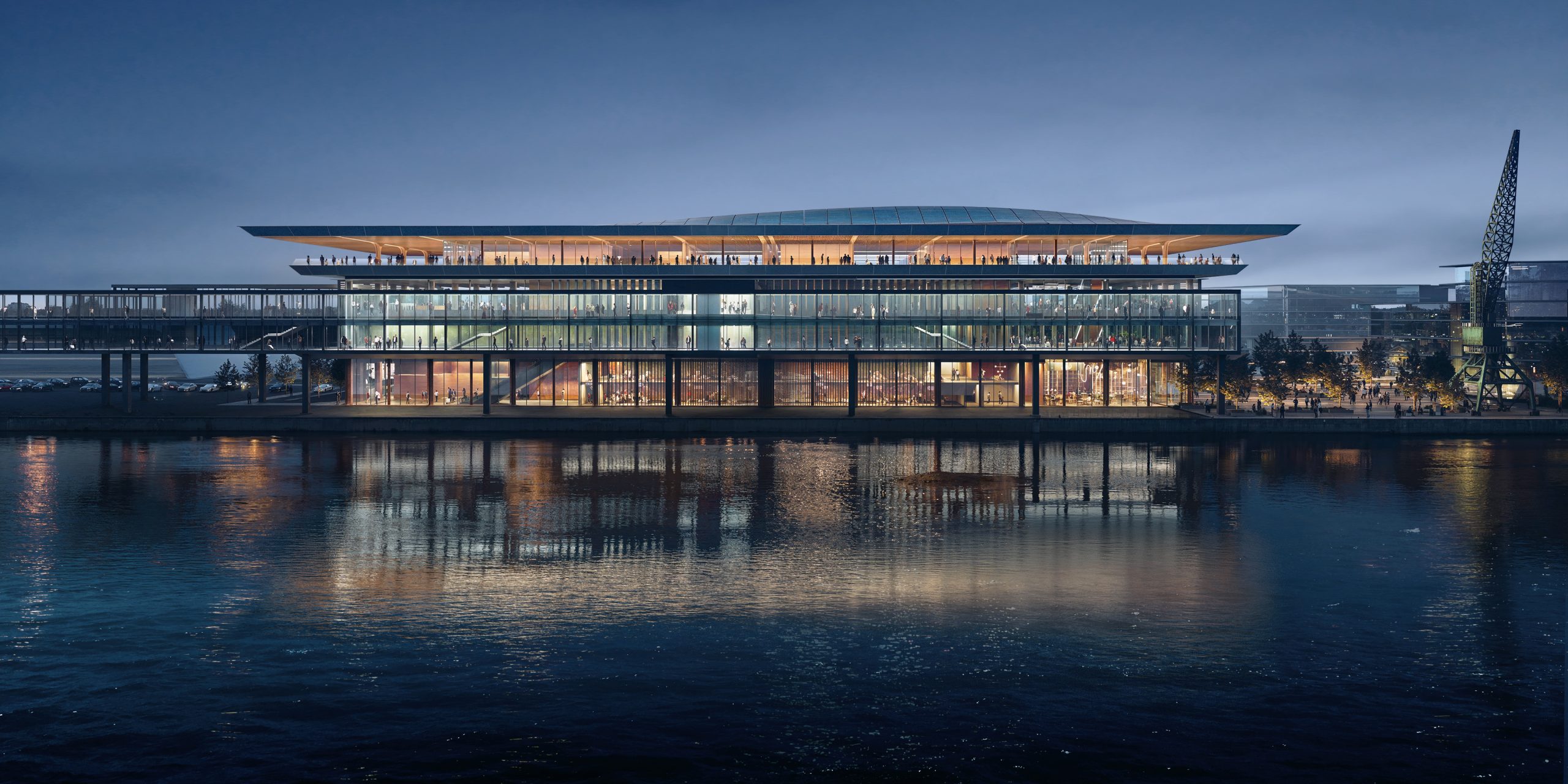
1st Place: Zaha Hadid Architects – night view from river – Render by Negativ
Arriving to board a ferry boat or cruise ship used to be a rather mundane experience. If you had luggage, you might be able to drop it off upon boarding, assuming that the boarding operation was sophisticated enough. In any case, the arrival experience was nothing to look forward to. I recall boarding the SS United States for a trip to Europe in the late 1950s. Arriving at the pier in New York, the only thought any traveler had was to board that ocean liner as soon as possible, find one’s cabin, and start exploring. If you were in New York City and arriving early, a nearby restaurant or cafe would be your best bet while passing time before boarding.
Read more…
|